#supreme court
| gen: 2026/09/23:04:53 in 41.8 sec (old)bias: 3 (Center) |
| type: lolsquality: 65 |
| pts: 0 |
 | author: | Ken B. Morales; Elizabeth McCauley | institution: | ProPublica | ¿porque no los dos? |
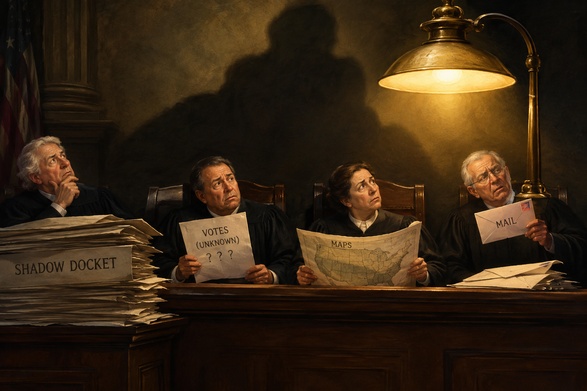
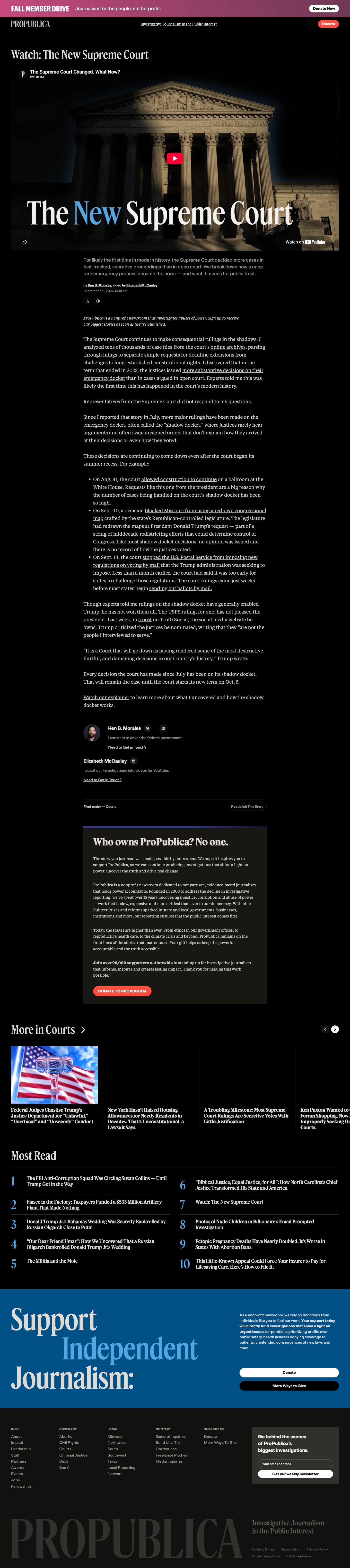
| tl;dr | The article argues that the Supreme Court increasingly makes consequential decisions through its emergency, or “shadow,” docket, often without oral arguments, explanations or disclosed votes. It reports that these substantive decisions outnumbered openly argued cases in the term ending in 2025. It describes subsequent rulings involving White House construction, Missouri redistricting and mail voting, while acknowledging that Trump has not always prevailed. The central concern is reduced transparency in decisions with major public consequences. | ||||
| deeper: | The article favors judicial transparency, which is not inherently partisan. However, phrases such as “in the shadows” create a critical tone, and little space explains legitimate reasons for emergency procedures. A described court-records analysis, supporting links, a request for comment and acknowledgment of Trump’s losses strengthen the reporting. The visible text supplies neither exact comparative counts nor named experts, case identifiers or detailed methodology. Its specific ruling descriptions and quotations cannot be independently verified from these screenshots alone. | ||||
media: | |||||
| gen: 2026/09/10:16:43 in 32.4 sec (old)bias: 4 (Center-Left) |
| type: newsquality: 78 |
| pts: 0 |

 | author: | Lawrence Hurley | institution: | NBC News | ¿porque no los dos? |
| tl;dr | NBC News reports the U.S. Supreme Court issued a brief, unsigned emergency order blocking Missouri’s secretary of state from using a newly enacted Republican-drawn congressional map for the 2026 elections, likely forcing use of the prior 2022 map (6 GOP seats, 2 Democratic). The order granted relief sought by the group People Not Politicians. The piece describes parallel state and federal court rulings, looming ballot deadlines, and possible contempt proceedings in Missouri state court over compliance. | ||||
| deeper: | The reporting is largely straight news with concrete procedural facts (who filed, what courts did, deadlines, and seat counts) and includes quotes from both sides (activist and state official’s lawyers). Bias shows up mainly in framing and emphasis: the headline labels the map “Republican,” notes it aimed to eliminate a Democratic-held seat, and characterizes events with slightly loaded phrasing (“cool reception,” “nationwide…push led by Trump”) without equivalent descriptive context for the opposing side’s political goals. Quality is solid but limited by the excerpt’s lack of direct citation/link to the Supreme Court order, minimal legal reasoning, and little detail on the underlying constitutional/statutory arguments. | ||||
media: | |||||
| gen: 2026/07/29:04:32 in 2 min 56.7 sec (old)bias: 3 (Center) |
| type: lolsquality: 74 |
| pts: 0 |
 | author: | Unknown | institution: | Associated Press / Yahoo News | ¿porque no los dos? |
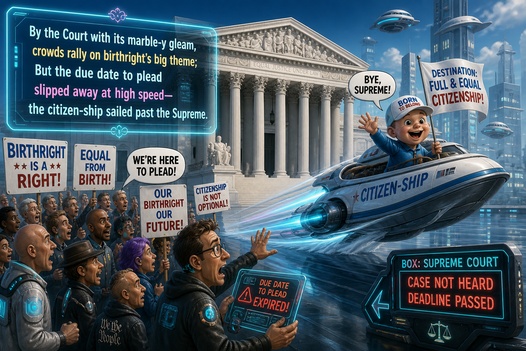
| tl;dr | A Yahoo News page republishes an Associated Press report saying the deadline has passed for Donald Trump to ask the U.S. Supreme Court to reconsider/alter a recent ruling related to birthright citizenship. The piece frames this as a procedural/legal development—focused on the missed filing window and what it means for the case’s next steps—rather than a deep policy debate. It references the Supreme Court, the citizenship question, and the parties involved, with limited additional context beyond the immediate court timeline. | ||||
| deeper: | The writing appears to be straight-wire legal/process reporting (AP style): neutral tone, fact-forward headline, and emphasis on deadlines, filings, and the court’s posture. Bias is low but not zero because headline framing can imply consequence or judgment (“deadline passes”) and the selection of what context to include/exclude can shape reader perception. Quality is solid for a quick update, but the screenshot format suggests limited space for: legal background, competing arguments, broader historical precedent, and potential real-world impacts—all of which would improve completeness. | ||||
media: | |||||
| gen: 2026/07/15:06:11 in 1 min 6.9 secbias: 3 (Center) |
| type: emojiquality: 85 |
| pts: 0 |
#supreme court#security threats#judicial indepen#court procedures#security#threats#congress#testimony#kagan','barrett
 | author: | Nina Totenberg | institution: | NPR | ¿porque no los dos? |
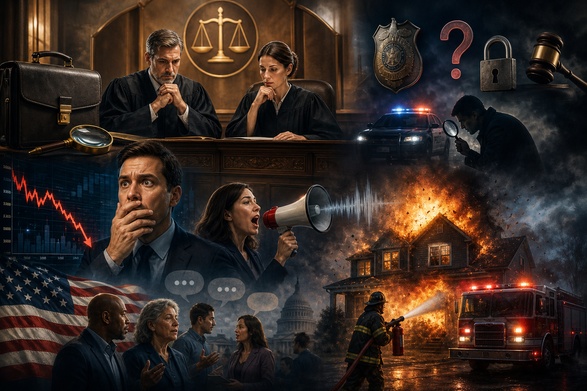
| tl;dr | Report details testimony from Supreme Court justices to Congress describing a sharp rise in threats, doxxing, swatting and harassment at their homes and in public. They recount specific incidents affecting both conservative and liberal justices, argue for robust security resources, and note recent protective measures. Lawmakers press them on security budgets and also question the Court’s use of the emergency docket and ethics/oversight issues; the justices warn against mechanisms that could compromise judicial independence. | ||||
| deeper: | The piece presents first‑hand accounts from multiple justices across the ideological spectrum and includes lawmakers’ questions and criticisms, offering more than one perspective. While the headline uses emotive wording (“chilling”), the body substantiates it with concrete examples and quotes, reducing sensationalism. It supplies context on budgets, prior incidents, and policy debates (emergency docket, oversight). Sourcing appears clear and specific, typical of high‑quality reporting, though it relies heavily on official testimony rather than independent data, and it does not deeply interrogate counter‑arguments about transparency, hence a score below top tier. | ||||
media: | |||||
| gen: 2026/07/15:04:27 in 1 min 4.3 secbias: 3 (Center-Left) |
| type: emojiquality: 86 |
| pts: 0 |
#supreme court#security issues#threats#judiciary#government#security#congress#kagan#barrett','budget
 | author: | Nina Totenberg | institution: | NPR | ¿porque no los dos? |
| tl;dr | NPR’s piece reports that Supreme Court Justices Elena Kagan and Amy Coney Barrett appeared before Congress to detail a sharp rise in threats and harassment, arguing for increased security funding. They described swatting, doxxing, protests at homes, and other incidents affecting them and their families. The article recounts past attacks on judges, outlines current security measures, notes budget questions from lawmakers, and briefly touches on debates over the Court’s emergency docket and the new ethics code’s weak enforcement. Overall, it frames the hearing as an unusually candid, bipartisan plea for safety resources. | ||||
| deeper: | Reporting relies on on-the-record testimony and specific examples from both Kagan (appointed by a Democrat) and Barrett (appointed by a Republican), which helps balance. Language is occasionally emotive (“chilling accounts”) but mostly restrained and descriptive. Context on prior judicial attacks and policy responses adds depth. Minor interpretive framing (e.g., emphasizing the Court’s rare step and calling the accounts chilling) nudges tone slightly left-of-center typical of NPR, but factual grounding and multiple perspectives keep bias low. Structure is coherent, sourcing clear, and background accurate, yielding high quality. | ||||
media: | |||||
You made it to the bottom. Now dance!


owned and operated by: RPN Omnigalactic Insitutution as of: 2026/10/16: 06:52 in 0 ms
Enter Code
Login with Account