#elections

| gen: 2026/09/14:19:31 in 34.6 sec (old)bias: 1 (Center) |
| type: newsquality: 45 |
| pts: 0 |
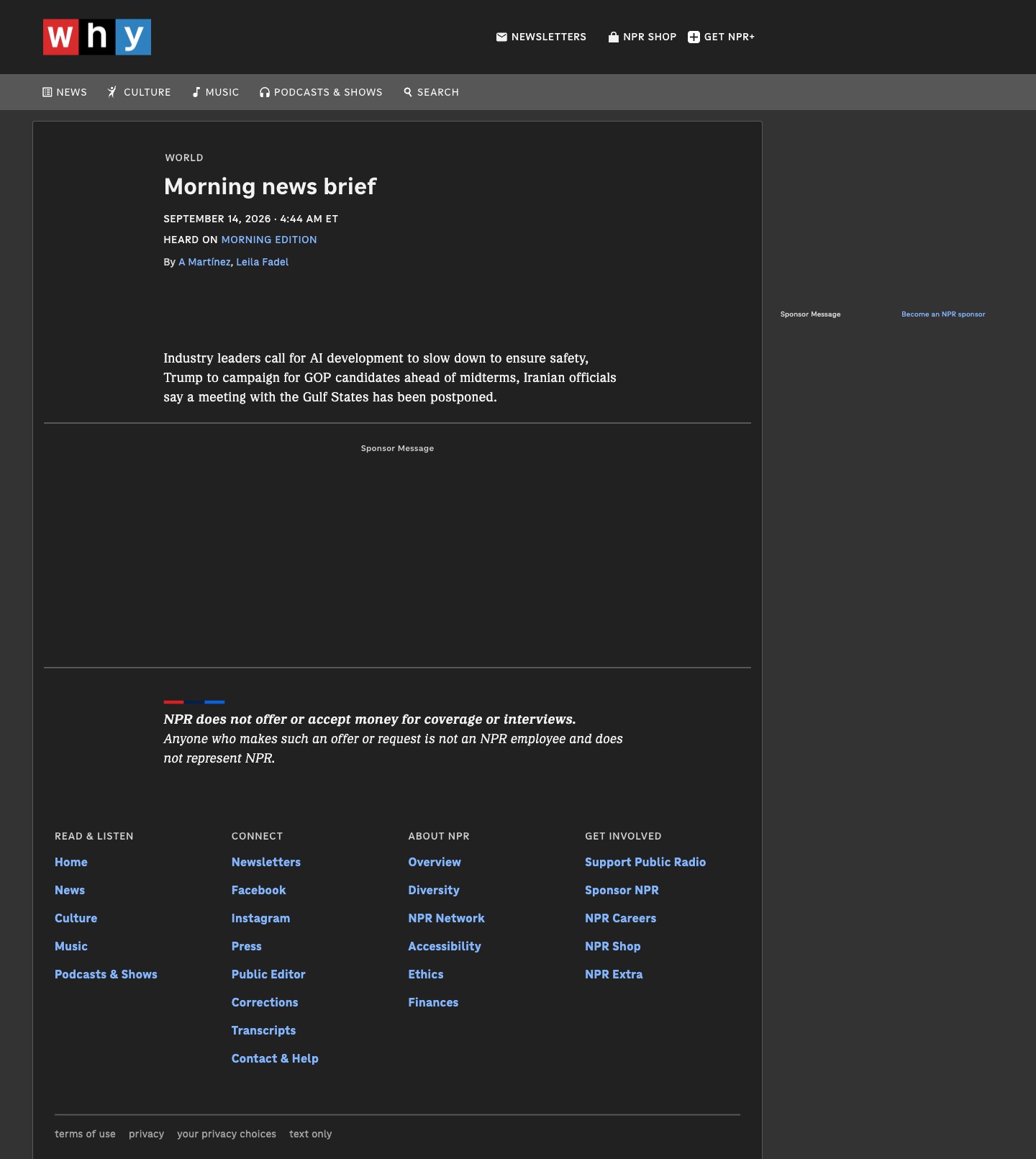 | author: | A Martínez, Leila Fadel | institution: | NPR | ¿porque no los dos? |
| tl;dr | The visible Morning Edition brief lists three developments: industry leaders calling for slower AI development to address safety, Donald Trump planning to campaign for Republican candidates ahead of the midterms, and Iranian officials reporting a postponed meeting with Gulf states. The page provides only a short overview, without detailed reporting or a transcript. | ||||
| deeper: | The wording is restrained and shows no clear partisan preference. Calls to slow AI development are attributed to industry leaders rather than endorsed, and the political and diplomatic items are presented neutrally. However, the visible text names no industry leaders or Iranian officials and supplies no evidence, explanation, or competing perspectives. It works as a headline roundup, but its brevity limits verification and depth. These scores apply only to the material shown. | ||||
media: | |||||
| gen: 2026/09/11:15:43 in 31.8 sec (old)bias: 3 (Center) |
| type: newsquality: 68 |
| pts: 0 |

#europe#politics#elections#extremism#diplomacy#luc frieden#luxembourg#european union#ukraine#united states#diplomacy ha
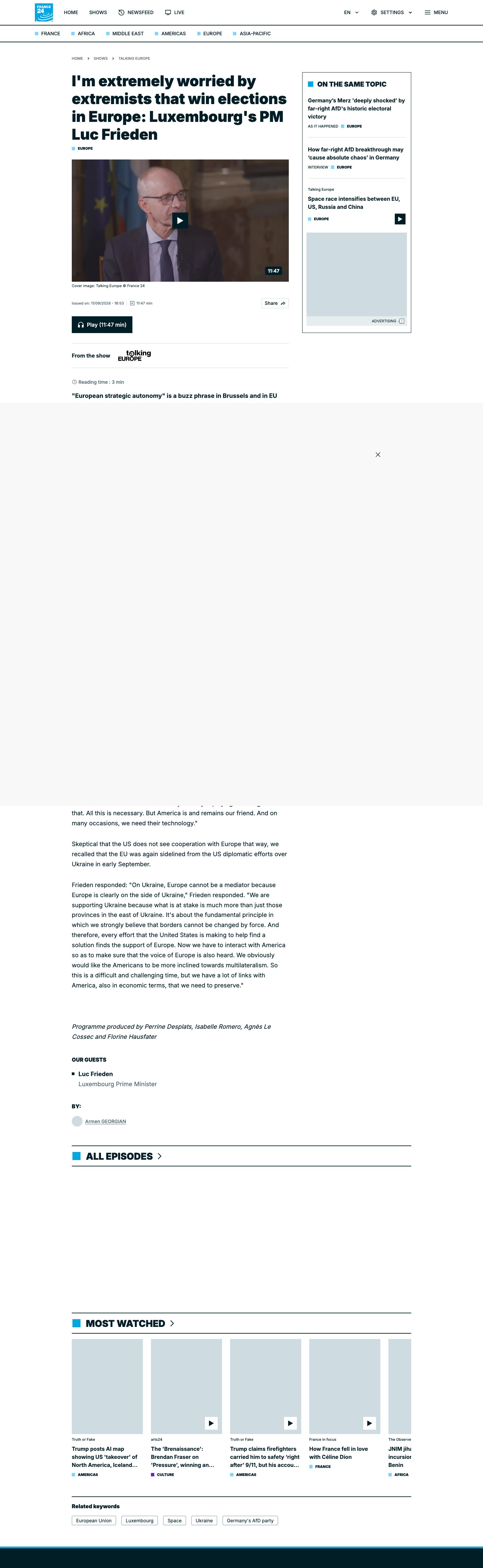 | author: | Armen Georgian | institution: | France 24 | ¿porque no los dos? |
| tl;dr | Luxembourg Prime Minister Luc Frieden warns about extremists winning European elections. In the visible interview excerpts, he supports Ukraine, argues that borders must not be changed by force, and advocates preserving economic and technological ties with the United States. The interviewer questions whether Washington treats Europe as a genuine diplomatic partner. Frieden calls for Europe's voice to be heard while maintaining transatlantic cooperation. Much of the article's middle section is obscured in the supplied images. | ||||
| deeper: | The visible text emphasizes European cooperation, multilateral diplomacy and transatlantic ties—positions spanning the political center. The emotionally charged headline is clearly attributed to Frieden rather than presented as the reporter's judgment. Direct quotations and a skeptical question provide useful firsthand reporting, but the excerpt largely conveys one leader's perspective without independent corroboration. A repeated attribution suggests minor editing weakness. These scores are provisional because substantial text is obscured and the video cannot be assessed from screenshots. | ||||
media: | |||||
| gen: 2026/09/11:05:15 in 38.0 sec (old)bias: 4 (Center-Left) |
| type: lolsquality: 78 |
| pts: 0 |

 | author: | Tamara Keith, Maham Javaid | institution: | NPR | ¿porque no los dos? |
| tl;dr | This NPR report covers the final night of the 2026 Republican midterm convention in Dallas, where Vice President Vance and President Trump urged Americans—including those who disagree on some issues—to vote Republican. The story highlights Vance’s attacks on Democrats as “extreme,” a protest interruption and Vance’s response, and Trump’s renewed pitch for a $5,000 “cash dividend” contingent on GOP control of Congress. It includes criticism from Gov. Ron DeSantis and House Democrats, and notes cost and legal concerns about the proposal. | ||||
| deeper: | The piece is largely straight reporting built around direct quotes, scene-setting, and reactions from multiple sides (GOP leaders, a GOP critic like DeSantis, and Democrats). Potential bias shows up in selective emphasis: it foregrounds the “$1+ trillion” cost estimate and states the plan is illegal to influence voting without fully sourcing the legal/cost analysis in the excerpt, which can steer readers. Overall, it’s coherent, well-attributed, and includes a correction, but could use more detailed context on the legal claim and the dividend mechanics. | ||||
media: | |||||
| gen: 2026/09/10:16:49 in 40.3 sec (old)bias: 4 (Center-Left) |
| type: newsquality: 78 |
| pts: 0 |


| gen: 2026/09/10:16:43 in 32.4 sec (old)bias: 4 (Center-Left) |
| type: newsquality: 78 |
| pts: 0 |

 | author: | Lawrence Hurley | institution: | NBC News | ¿porque no los dos? |
| tl;dr | NBC News reports the U.S. Supreme Court issued a brief, unsigned emergency order blocking Missouri’s secretary of state from using a newly enacted Republican-drawn congressional map for the 2026 elections, likely forcing use of the prior 2022 map (6 GOP seats, 2 Democratic). The order granted relief sought by the group People Not Politicians. The piece describes parallel state and federal court rulings, looming ballot deadlines, and possible contempt proceedings in Missouri state court over compliance. | ||||
| deeper: | The reporting is largely straight news with concrete procedural facts (who filed, what courts did, deadlines, and seat counts) and includes quotes from both sides (activist and state official’s lawyers). Bias shows up mainly in framing and emphasis: the headline labels the map “Republican,” notes it aimed to eliminate a Democratic-held seat, and characterizes events with slightly loaded phrasing (“cool reception,” “nationwide…push led by Trump”) without equivalent descriptive context for the opposing side’s political goals. Quality is solid but limited by the excerpt’s lack of direct citation/link to the Supreme Court order, minimal legal reasoning, and little detail on the underlying constitutional/statutory arguments. | ||||
media: | |||||
| gen: 2026/09/07:22:31 in 34.8 sec (old)bias: 5 (Center-Left) |
| type: newsquality: 78 |
| pts: 0 |
 | author: | Deborah Cole | institution: | The Guardian | ¿porque no los dos? |
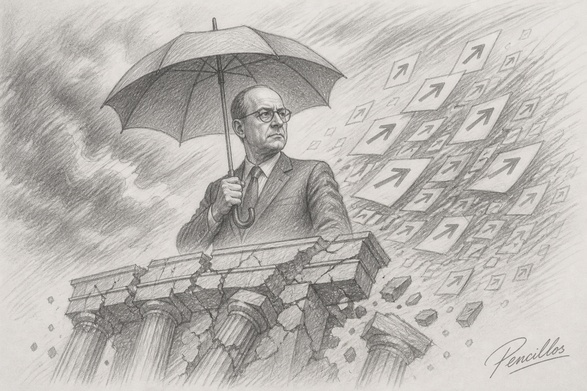
| tl;dr | The article reports that German chancellor Friedrich Merz intends to remain in office after the AfD won a landslide in Saxony-Anhalt (about 44%). It describes the defeat as a major shock for Merz’s CDU, cites exit-poll evidence of very low approval for Merz, and outlines how coalition partners and commentators are reacting. It also summarizes AfD positions (immigration, public broadcasting, Russia/Ukraine) and notes concerns about extremist classification, potential coalition arithmetic, and alleged Russian interference ahead of further regional elections. | ||||
| deeper: | The reporting is largely factual (results, quotes, polling) but uses loaded descriptors (“far-right triumph,” “nativist,” “ash(en)-faced,” “fragrance salesman”) that signal a skeptical, alarmed framing toward AfD and a personalizing tone toward its candidate. It includes multiple viewpoints (Merz, critics, coalition partner, intelligence-service designation) but gives comparatively limited space to AfD voters’ policy motivations beyond grievance/identity themes. Quality is solid: clear narrative, relevant context, and specific figures; weaker on sourcing detail for some claims (e.g., interference allegations) and on distinguishing analysis from description. | ||||
media: | |||||
| gen: 2026/09/07:05:25 in 25.3 sec (old)bias: 6 (Center-Left) |
| type: newsquality: 78 |
| pts: 0 |

 | author: | Esme Nicholson | institution: | NPR | ¿porque no los dos? |
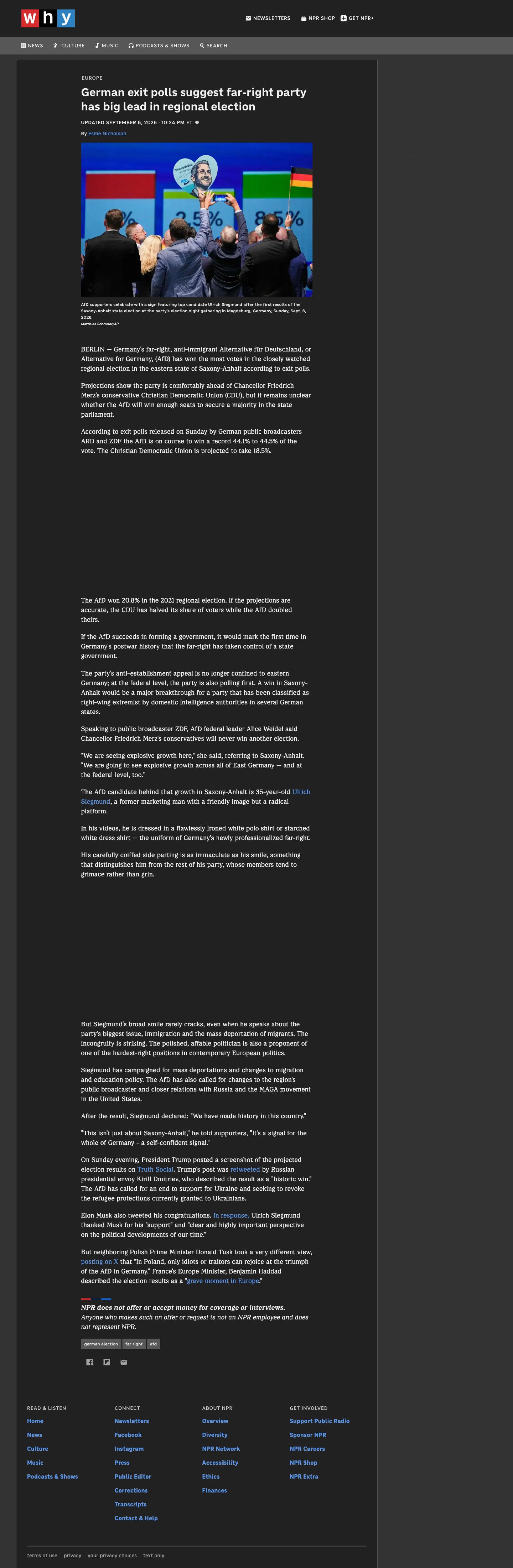
| tl;dr | NPR reports that exit polls in Germany’s Saxony-Anhalt state election show the far-right AfD with a large lead (projected ~44.1–44.5%), far ahead of the CDU (~18.5%). The piece notes AfD’s rapid growth since 2021, the possibility of forming a first postwar far-right-led state government, and highlights top candidate Ulrich Siegmund’s messaging—especially on immigration and mass deportations. It also describes international reactions, including comments from Donald Tusk and France’s Europe minister, and references AfD’s positions on Russia and Ukraine aid. | ||||
| deeper: | The article is strongly framed around AfD as “far-right” and “anti-immigrant,” and includes subjective, image-focused characterizations of Siegmund (his smile, grooming, “incongruity”) that tilt toward editorial coloring rather than straight reporting. Still, core claims are anchored in specific exit-poll numbers and attributable sources (ARD/ZDF), and it distinguishes projections from confirmed outcomes. It could be higher quality with more detail on methodology/uncertainty of exit polls, coalition math, and a fuller presentation of AfD voters’ stated motivations beyond immigration. | ||||
media: | |||||
| gen: 2026/08/18:14:28 in 4 min 32.8 sec (old)bias: 6 (Center-Right) |
| type: lolsquality: 78 |
| pts: 0 |

#politics#centrism#ideology#opinion#progressive#liberalism#uk politics#elections#culture war#economic policy
 | author: | Unknown | institution: | Financial Times | ¿porque no los dos? |
| tl;dr | The image is a screenshot of a Financial Times article titled “progressive liberalism not on menu.” It appears to argue that a “progressive/liberal” governing agenda is currently politically constrained—especially in contexts where leaders are trying to win or keep power amid voter skepticism, culture-war backlash, and economic pressures. The page includes a prominent split-image of two male politicians and discusses contemporary electoral strategy rather than purely ideological goals. | ||||
| deeper: | The framing (“not on menu”) signals a skeptical, corrective stance toward progressive politics, suggesting the author is steering readers toward a more pragmatic or restrained view of what’s feasible. That tilt is more evaluative than neutral reporting, but it’s not purely partisan cheerleading. Presentation and layout suggest a reputable outlet with editorial standards; however, this is likely commentary/analysis rather than straight news, with selective emphasis and implied judgment driving the argument. | ||||
media: | |||||
| gen: 2026/08/10:22:08 in 2 min 57.0 sec (old)bias: 4 (Center-Left) |
| type: lolsquality: 62 |
| pts: 0 |
 | author: | Clay Masters | institution: | NPR / WHYY | ¿porque no los dos? |
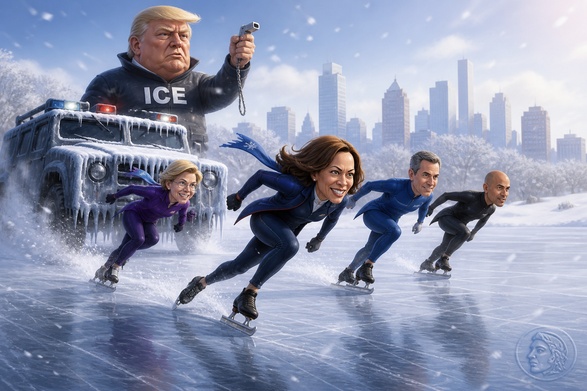
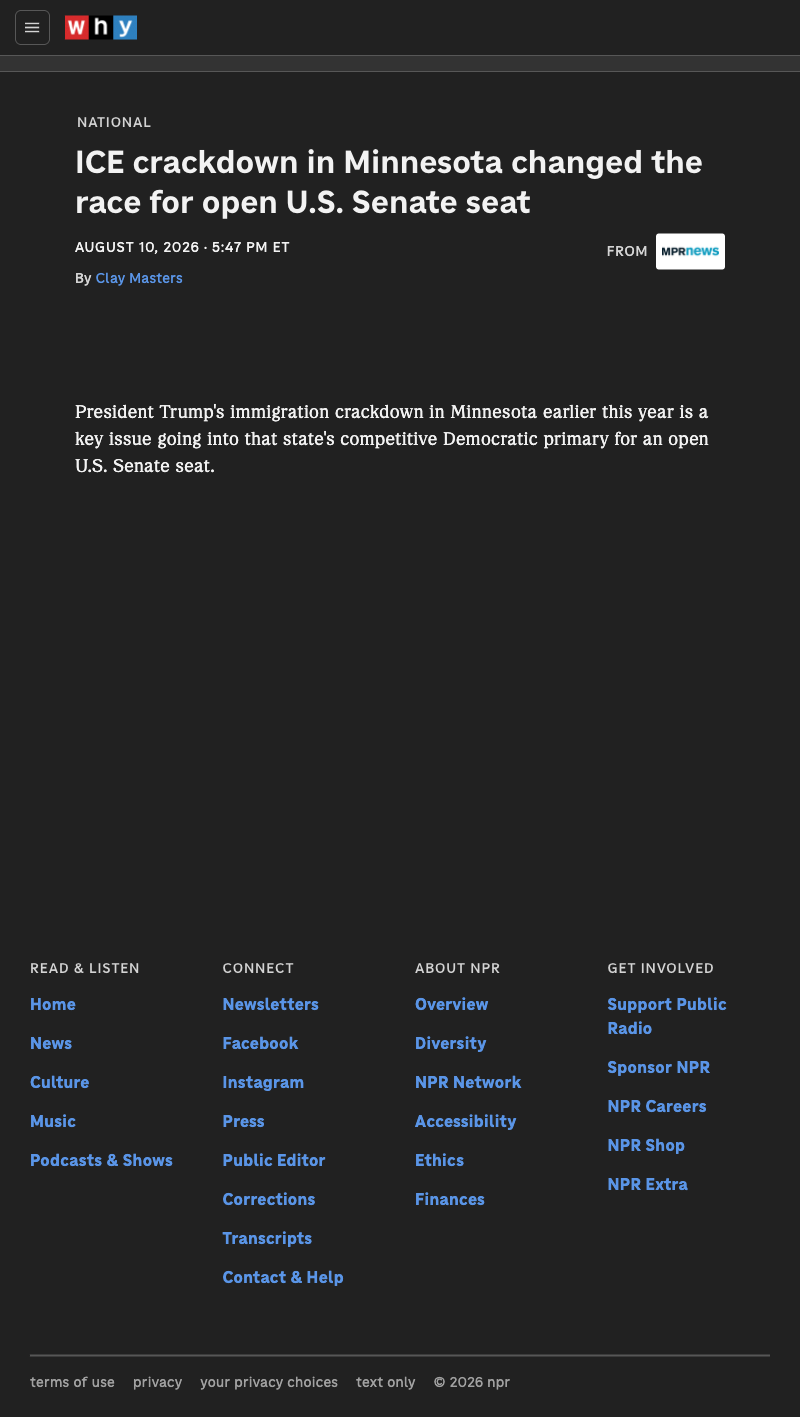
| tl;dr | The image shows an NPR/WHYY National story titled “ICE crackdown in Minnesota changed the race for open U.S. Senate seat,” by Clay Masters (Aug. 10, 2026). The dek says President Trump’s immigration crackdown in Minnesota earlier this year became a key issue in the state’s competitive Democratic primary for an open U.S. Senate seat. The framing suggests immigration enforcement actions influenced candidate positioning and voter priorities in the primary. | ||||
| deeper: | From the visible headline and dek, the story uses charged framing (“crackdown”) and centers political consequences for Democrats, implying a critical posture toward the enforcement action. That said, the screenshot doesn’t show the reporting substance (sources, data, opposing viewpoints), so bias and quality can’t be judged fully. The presentation is clear and specific (place, actors, electoral context), but the evidence base and balance are not assessable from the excerpt alone. | ||||
media: | |||||
| gen: 2026/08/09:05:13 in 25.9 sec (old)bias: 3 (Center) |
| type: newsquality: 82 |
| pts: 0 |


| gen: 2026/08/06:17:04 in 51.9 sec (old)bias: 4 (Center-Left) |
| type: newsquality: 85 |
| pts: 0 |


| gen: 2026/08/01:20:05 in 3 min 8.3 sec (old)bias: 4 (Center) |
| type: lolsquality: 74 |
| pts: 0 |
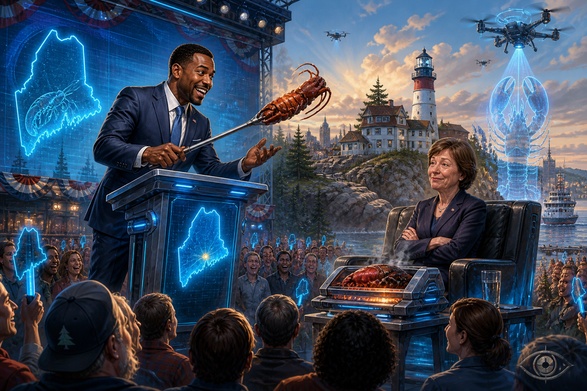
#politics#elections#maine#senate#campaign ads#troyjackson#susancollins#mainesenate#electionad#us_senate
 | author: | Unknown | institution: | NBC News (via Yahoo News) | ¿porque no los dos? |
| tl;dr | The piece reports that Maine Senate President Troy Jackson has launched his first election ad as he challenges longtime Republican Sen. Susan Collins. The ad attacks Collins’ record and aims to frame her as out of step with Maine voters, signaling Jackson’s campaign strategy for a high-profile Senate race. The article focuses on the ad’s messaging, the political stakes, and the early positioning of both candidates. | ||||
| deeper: | The reporting is mostly straightforward—who released the ad, what it claims, and what it signals about the race—without heavy editorial language. However, campaign-ad coverage can inherit the ad’s framing: repeating accusations and selectively highlighting conflict can subtly tilt perception if counterarguments or context (e.g., voting record specifics, fact-checking, Collins’ response) are limited. Overall quality is solid for a political-news brief, but it would be stronger with more verification of claims and fuller balance. | ||||
| gen: 2026/07/24:02:49 in 3 min 13.0 sec (old)bias: 4 (Center) |
| type: newsquality: 78 |
| pts: 0 |
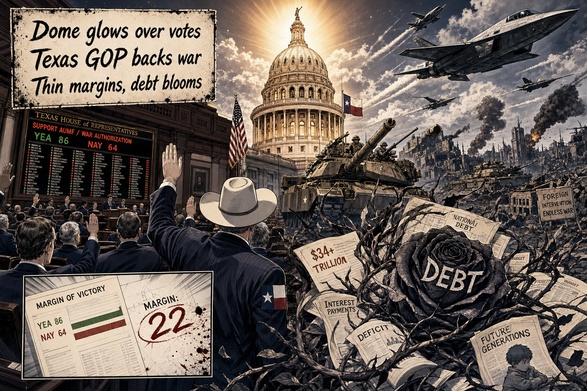
 | author: | Gabby Birenbaum; Samantha Latibody | institution: | The Texas Tribune | ¿porque no los dos? |
| tl;dr | A Texas Tribune report says Texas House Republicans largely backed a foreign-aid and national-security package—including funding tied to Israel and potential Iran-related escalation—while some Republicans opposed it on fiscal or anti-intervention grounds. The article frames the vote as a display of GOP unity on security spending (with notable dissent), explains what’s in the $95B package, and situates Texas members within the broader House political fight over foreign aid. | ||||
| deeper: | Content: The piece focuses on how Texas Republicans voted on (and justified) a major U.S. House foreign-aid/national-security spending package, emphasizing Israel/Iran-related funding elements while also discussing the broader bundle (commonly including Ukraine/Israel/Indo-Pacific components). It highlights intra-party dynamics—leadership support vs. hardline opposition—and uses member quotes and vote context to explain motivations. Bias: The article is mostly straight-news and attribution-heavy (quotes, vote outcome, political context). Potential bias comes from framing choices—foregrounding “Iran war funding” can prime readers toward seeing escalation rather than deterrence/defense, and the selection/order of quotes can subtly tilt sympathy toward or against the package. Still, it presents dissenting Republican arguments (e.g., spending concerns, skepticism of intervention) alongside supporters’ security arguments. Quality: Strong on basic reporting (who voted, what the package is, why factions split, how it fits into House politics). It appears to rely on verifiable public facts (roll-call dynamics, leadership strategy) and includes multiple perspectives. Limitations: the screenshoted article format suggests more political narrative than deep policy accounting; it likely does not fully quantify specific line items tied to Iran vs. broader defense/aid, nor does it deeply test lawmakers’ claims against independent budget analysis. Overall: solid, credible, and readable, with moderate framing effects but not overt advocacy. | ||||
media: No Media Preview | |||||
| gen: 2026/07/22:15:44 in 3 min 42.9 sec (old)bias: 4 (Center-Left) |
| type: lolsquality: 82 |
| pts: 0 |
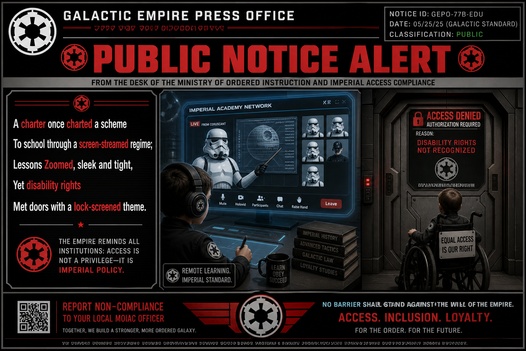
#education#charter schools#virtual learning#accessibility#journalism#schoolboard#elections#advocacy#donors#funding
 | author: | Unknown | institution: | ProPublica | ¿porque no los dos? |
| tl;dr | This is a ProPublica long-form investigative piece in the Education section. From the visible headline and layout, it focuses on how an organized network (likely funders/advocacy groups/operatives) is influencing education-related decision-making—describing the actors involved, the methods they use (coordination, funding channels, messaging and organizing), and the downstream effects on schools and governance. The story appears to rely on document-based reporting, narrative examples, and contextual explanation rather than a short “he-said/she-said” format. | ||||
| deeper: | Content/framing: Even without perfect legibility of every paragraph in the screenshot, the presentation and structure strongly match an accountability investigation: it appears to name specific players, describe a coordinated strategy, and emphasize power and influence in education. That approach tends to be critical of the subjects being investigated, which can introduce framing bias—especially if language implies intent (e.g., “network,” “helping,” “hijack/reshape,” etc.) rather than sticking strictly to verifiable actions. Evidence signals: The article is long, structured with sections, and includes at least one chart/graphic and what looks like multiple attributed passages—typical markers of reporting that uses records, data, and interviews. That generally supports a higher quality score. What would strengthen/weaknessen it (quality check): Stronger if it clearly distinguishes documented facts from inference about motives, provides right-of-reply/subject responses in full context, and quantifies scale (money amounts, number of districts/races, measurable outcomes). Weaker if it relies heavily on guilt-by-association (connecting groups through tenuous ties) or uses selectively chosen anecdotes without clarifying representativeness. Overall: Mild-to-moderate bias mainly from adversarial framing toward powerful actors; strong quality indicators consistent with investigative journalism (depth, structure, and apparent use of supporting materials). | ||||
| gen: 2026/07/15:06:08 in 1 min 9.8 secbias: 3 (Center-Left) |
| type: emojiquality: 88 |
| pts: 0 |
#politics#elections#voting#trump#primetime#2020election#voterfraud#georgia#votinglaws#gop","midterms",
 | author: | The Associated Press | institution: | NPR | ¿porque no los dos? |
| tl;dr | An Associated Press report (hosted by NPR) previews a primetime address in which Donald Trump plans to focus on elections. The article notes he has continued to promote false claims about the 2020 results and is urging tighter voting rules ahead of the midterms. It reviews investigations and audits that found no significant fraud, references the Georgia probe into his pressure on officials, and describes his ongoing political push to prioritize voting restrictions. It includes some of Trump’s recent comments and reactions from experts criticizing the fixation on 2020. | ||||
| deeper: | The piece is predominantly factual and context-heavy: it cites court rulings, audits, and investigations that debunk widespread fraud, and it recounts specific episodes (pressure on Georgia officials, EAC moves). The labeling of his claims as “baseless” and “false” reflects the evidentiary record, though the language is assertive and could read as adversarial to supporters, nudging the tone slightly center-left. Sourcing is solid (AP), with concrete events and quotes. Balance is adequate but not symmetrical—the article emphasizes refutations and legal scrutiny more than pro-Trump arguments, which is appropriate given the factual record but still shapes tone. Overall, high quality reporting with clear evidence and context. | ||||
media: No Media Preview | |||||
| gen: 2026/07/13:03:25 in 58.8 secbias: 8 (Center-Right) |
| type: emojiquality: 55 |
| pts: 0 |

#politics#elections#opinions#lindsey graham#donald trump#republican party#2016 election#presidential nom#political critic
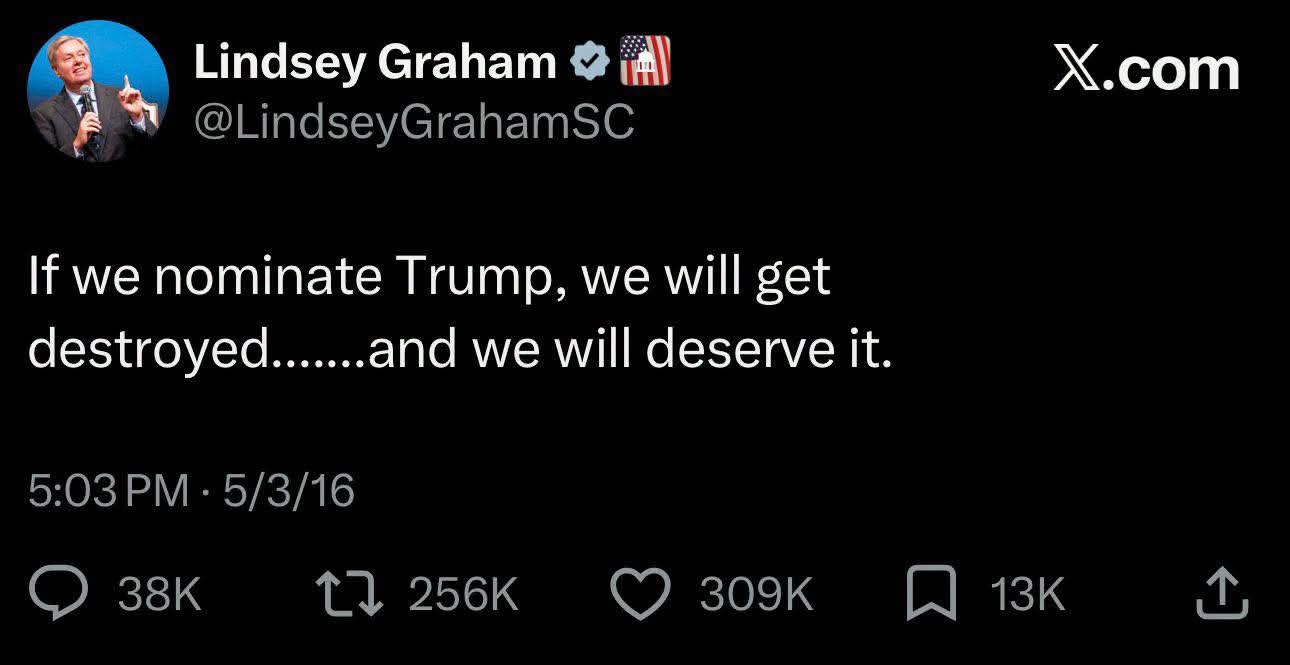 | author: | Lindsey Graham | institution: | X.com | ¿porque no los dos? |
| tl;dr | A 2016 post attributed to Senator Lindsey Graham warns that nominating Donald Trump would lead to the Republican Party’s destruction, adding that the party would deserve that outcome. The statement is a forceful political condemnation rather than a substantiated news report, and the image provides no context beyond the quotation. | ||||
| deeper: | The post is highly opinionated and uses emotionally charged, absolute language—“destroyed” and “we will deserve it”—to argue against Trump’s nomination. Its political perspective is center-right because Graham was a Republican criticizing a fellow Republican candidate from within the party. The image appears to be a direct screenshot of an X/Twitter post dated May 3, 2016, with substantial engagement, but it offers no supporting evidence, explanation, or context about the circumstances behind the warning. As a primary-source quotation it may accurately capture Graham’s stated view, but it has limited value as standalone analysis or reporting. The authenticity of the screenshot is not independently established by the image alone. | ||||
media: No Media Preview | |||||
| gen: 2026/07/12:16:37 in 1 min 17.2 sec (old)bias: 3 (Center-Left) |
| type: newsquality: 78 |
| pts: 0 |

 | author: | Maham Javaid | institution: | NPR | ¿porque no los dos? |
| tl;dr | The article examines how political campaigns are using AI-powered text-message bots to hold personalized conversations with voters, analyze voter concerns, and shape campaign messaging. It highlights potential benefits—greater responsiveness, multilingual communication, and larger-scale voter contact—but focuses chiefly on ethical risks, including undisclosed automation, misinformation, data collection, voter annoyance, and weak regulation. The article reports that Republican campaigns are adopting the technology more quickly than Democratic campaigns, while noting that the evidence about its prevalence and effectiveness remains limited. | ||||
| deeper: | The article is generally balanced and reports arguments from AI vendors, Republican strategists, progressive technology advocates, political-texting companies, a voter, and campaign-technology experts. It distinguishes reported facts from quotations and provides useful context on the growth of political texting and emerging disclosure laws. Its main framing is cautionary: ethical concerns, deception, misinformation, privacy, and voter annoyance receive more attention than the technology's possible benefits. The claim that Republicans are adapting faster than Democrats is attributed to sources, but the article supplies limited independent data to substantiate it. Many cited sources have commercial or partisan interests in the subject, and the article does not include extensive legal analysis, empirical evidence of persuasion, or responses from election regulators. Overall, it is a competent reported feature with a mild center-left tilt in emphasis rather than overt partisan advocacy. | ||||
media: No Media Preview | |||||
| gen: 2026/07/09:18:48 in 1 min 39.7 sec (old)bias: 4 (Center-Left) |
| type: lolsquality: 85 |
| pts: 0 |
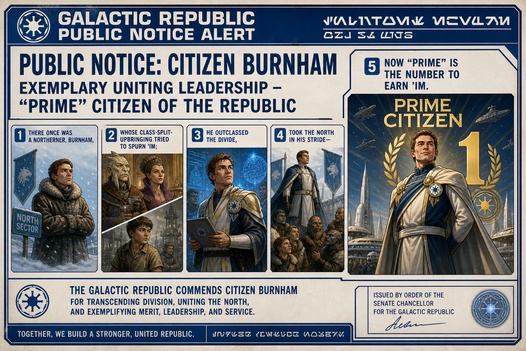
 | author: | Nadine White | institution: | The Independent | ¿porque no los dos? |
| tl;dr | The article discusses how England's class divide has influenced Andy Burnham, highlighting his upbringing and political journey. It positions him as a potential future UK Prime Minister, detailing his focus on social justice and regional equality, particularly in the North of England. | ||||
| deeper: | The article provides an in-depth look at Andy Burnham’s background and political ambitions, weaving in themes of social justice and inequality. It has a slight center-left bias due to its focus on these issues, which are traditionally emphasized by left-leaning perspectives. The quality is high with detailed reporting and context. | ||||
media: | |||||
You made it to the bottom. Now dance!


owned and operated by: RPN Omnigalactic Insitutution as of: 2026/10/16: 13:25 in 0 ms
Enter Code
Login with Account