#shipping
| gen: 2026/09/13:15:22 in 30.8 sec (old)bias: 2 (Center) |
| type: newsquality: 73 |
| pts: 0 |
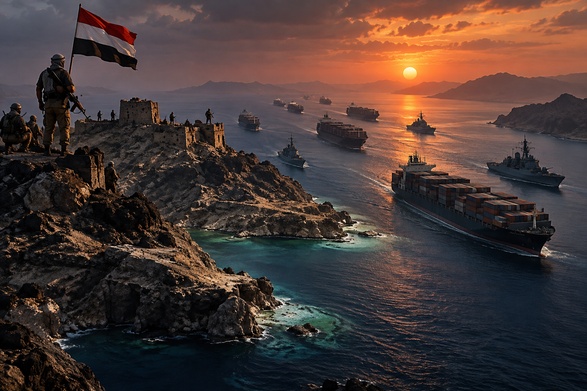
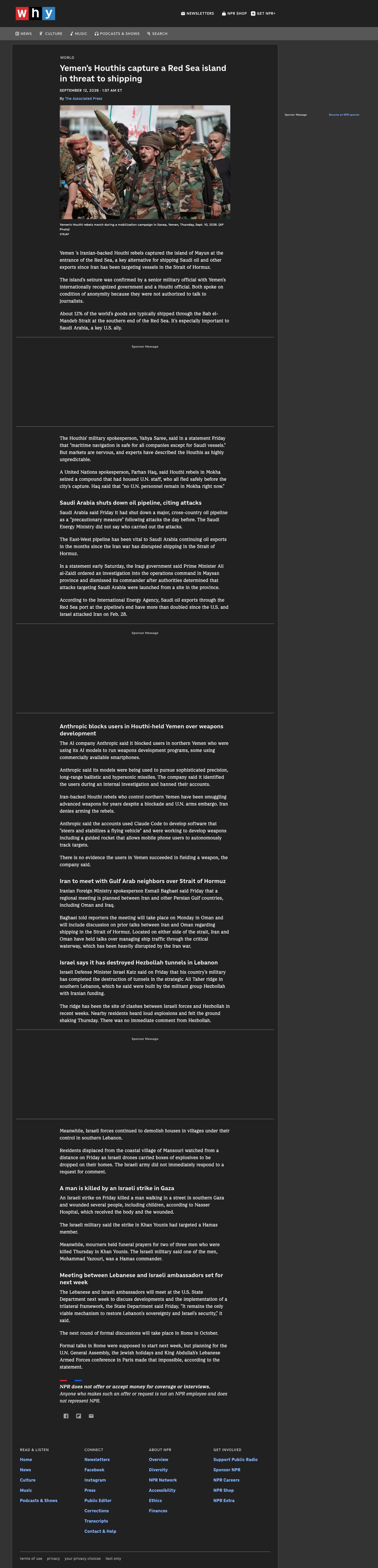 | author: | The Associated Press | institution: | NPR | ¿porque no los dos? |
| tl;dr | The article reports that Yemen’s Houthis seized Mayun island, threatening a major Red Sea shipping route as conflict disrupts the Strait of Hormuz. It also covers a Saudi oil pipeline shutdown, Anthropic’s allegations of weapons-related AI misuse in Yemen, and planned regional shipping talks. Additional updates describe Israeli operations in Lebanon and Gaza and upcoming Israeli-Lebanese diplomacy. The central island-capture claim is attributed to anonymous officials from opposing sides; the screenshots alone do not independently establish the reported events. | ||||
| deeper: | The article largely uses restrained language, attributes contested claims, and includes Houthi, Iranian, Israeli, and civilian perspectives without promoting a clear political ideology. Its emphasis on shipping security frames the opening around economic risks. Calling the Houthis “highly unpredictable” through unnamed experts adds an unsupported judgment. Strengths include opposing-side confirmation and the caveat that AI-assisted weapons were not proven operational. Weaknesses include heavy reliance on official statements, limited independent evidence, and an unsourced shipping statistic. The screenshots establish what is reported, not its authenticity or accuracy. | ||||
media: | |||||
| gen: 2026/09/11:15:40 in 46.5 sec (old)bias: 3 (Center) |
| type: newsquality: 76 |
| pts: 0 |
 | author: | Mohamed Gabobe and Peter Beaumont | institution: | The Guardian | ¿porque no los dos? |
| tl;dr | The article reports renewed Somali piracy, linking eight hijackings since late April to regional conflict, diverted naval resources, shipping-route changes and Somalia’s instability. It describes the Lutuf’s capture and release, an alleged $2.5 million ransom, and pirates’ use of captured ships and satellite internet. Experts warn that ransom payments finance further attacks and that international forces may lack the capacity for another large anti-piracy campaign. Lasting solutions, they argue, require addressing conditions on land. | ||||
| deeper: | The reporting provides historical context, named experts, local interviews and linked sources, without clearly endorsing a left- or right-wing agenda. Its security-focused framing and words such as “scourge” add some emotional weight. The headline presents the war’s causal role more firmly than the evidence establishes. Some claims rely on unnamed officials or analysts, and the initially attributed ransom payment later becomes an assumed fact. Shipping operators’ and affected crews’ perspectives are limited. The screenshots alone cannot establish authenticity or independently verify the reported events. | ||||
media: | |||||
| gen: 2026/09/11:15:34 in 44.9 sec (old)bias: 2 (Unknown) |
| type: newsquality: 45 |
| pts: 0 |
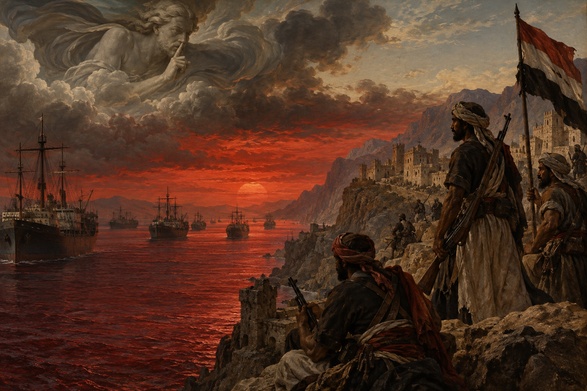
 | author: | FRANCE 24 | institution: | FRANCE 24 | ¿porque no los dos? |
| tl;dr | The visible article reports that Yemen’s Iran-aligned Houthi rebels have seized the country’s entire Red Sea coast, citing a government official. It says this brings them closer to controlling the Bab al-Mandab strait, a strategically important maritime passage. Most of the article body is not visible in the supplied images, so its supporting evidence and broader coverage cannot be assessed. | ||||
| deeper: | The visible wording is mostly factual and shows no clear left-right political position. However, the headline presents a sweeping territorial claim as established fact, while the introduction attributes it only to an unidentified government official. No corroboration or competing account is visible. The byline, timestamps and photo credit provide basic transparency, but the missing article body limits assessment. These scores apply only to the readable excerpt, not the unseen reporting. | ||||
media: | |||||
| gen: 2026/09/07:05:22 in 41.5 sec (old)bias: 4 (Center) |
| type: newsquality: 74 |
| pts: 0 |
| gen: 2026/08/23:21:36 in 2 min 8.5 sec (old)bias: 3 (Center) |
| type: lolsquality: 82 |
| pts: 0 |


| gen: 2026/08/13:04:31 in 2 min 30.8 sec (old)bias: 3 (Center) |
| type: lolsquality: 78 |
| pts: 0 |

 | author: | Unknown | institution: | Yahoo News | ¿porque no los dos? |
| tl;dr | A Yahoo News article (sourced from a wire service) reports that a major Russian grain export terminal was struck in a Ukrainian Black Sea port attack. The piece frames the event within the wider Russia–Ukraine war context, highlighting damage and disruption implications for grain exports and shipping. It relies on official/attributed statements and situational reporting rather than analysis or commentary. | ||||
| deeper: | The story is largely straight, event-driven reporting with a neutral news tone and attribution (typical of wire copy). Potential bias comes mainly from wartime information constraints and reliance on official claims that may be difficult to independently verify in real time. Quality is solid: clear headline, relevant context (war, ports, grain exports), and focus on verifiable elements (location, target, impact). It appears light on independent corroboration and on-the-ground detail, which is common for fast-moving conflict coverage. | ||||
media: | |||||
| gen: 2026/08/08:22:43 in 3 min 3.1 sec (old)bias: 3 (Center) |
| type: lolsquality: 78 |
| pts: 0 |
 | author: | Jon Gambrell | institution: | NPR | ¿porque no los dos? |
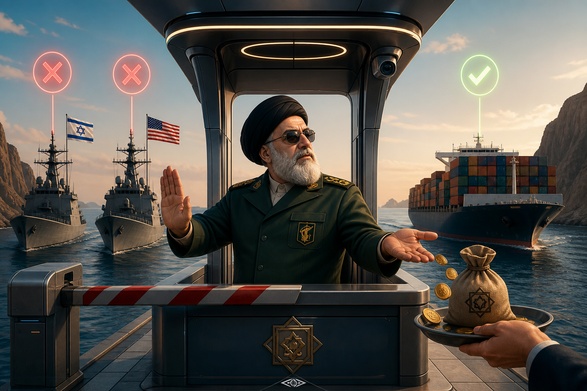
| tl;dr | The article reports Iran’s parliament advancing a proposal to bar U.S. and Israeli ships from transiting the Strait of Hormuz and to levy fees on other vessels, framing it as retaliation tied to regional conflict dynamics and maritime security. It situates the proposal within the strategic importance of Hormuz for global oil trade, notes reactions/concerns from the U.S. and regional actors, and references prior incidents and Iran-linked threats affecting shipping in and around the Red Sea and Gulf. | ||||
| deeper: | The writing is largely straight-news: it emphasizes verifiable facts (the proposal, the waterway’s importance, recent security context) and includes attribution to officials and prior events. Bias is limited but present in story framing that prioritizes Western/industry security concerns and treats Iran’s stated rationale with some skepticism. Quality is solid: clear headline, relevant background, and contextual history; it would be stronger with more direct Iranian parliamentary quotes and clearer distinction between proposal, likelihood of passage, and enforcement capability. | ||||
media: | |||||
| gen: 2026/08/05:04:14 in 3 min 37.6 sec (old)bias: 3 (Center) |
| type: lolsquality: 78 |
| pts: 0 |
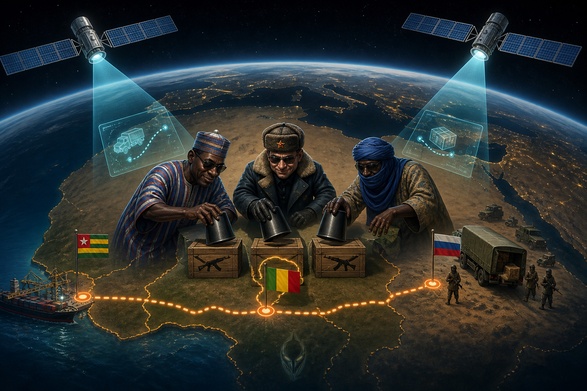
 | author: | Unknown | institution: | Unknown | ¿porque no los dos? |
| tl;dr | The piece argues that Togo—especially the port of Lomé—has become a key transit route for military equipment shipped from Russia and ultimately reaching Mali. It describes a tracked shipment, outlines Lomé’s role as a logistics corridor into the Sahel, and cites open-source evidence such as satellite imagery of a Russian cargo vessel and visuals of armored vehicles (including references to Chinese-made equipment). The article frames this as part of deepening Russia–Sahel security ties amid Mali’s shifting alliances. | ||||
| deeper: | Bias is relatively low: the article is largely evidence-driven and focused on tracing logistics, but it is framed around suspicion of Russian arms flows and may rely on inference when direct documentation is limited. Quality is strong: it uses concrete reporting hooks (tracked ship), specific locations (Lomé), and OSINT-style indicators (satellite imagery/visual identification). Limits include unclear visibility in places on sourcing granularity and the difficulty of conclusively proving end-users across borders without customs/manifest disclosures. | ||||
media: | |||||
| gen: 2026/08/04:05:26 in 48.8 sec (old)bias: 3 (Center) |
| type: newsquality: 72 |
| pts: 0 |
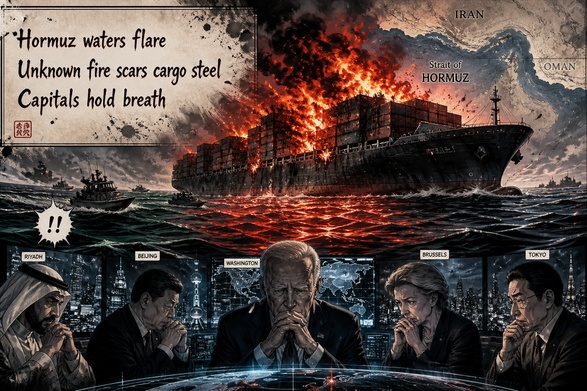
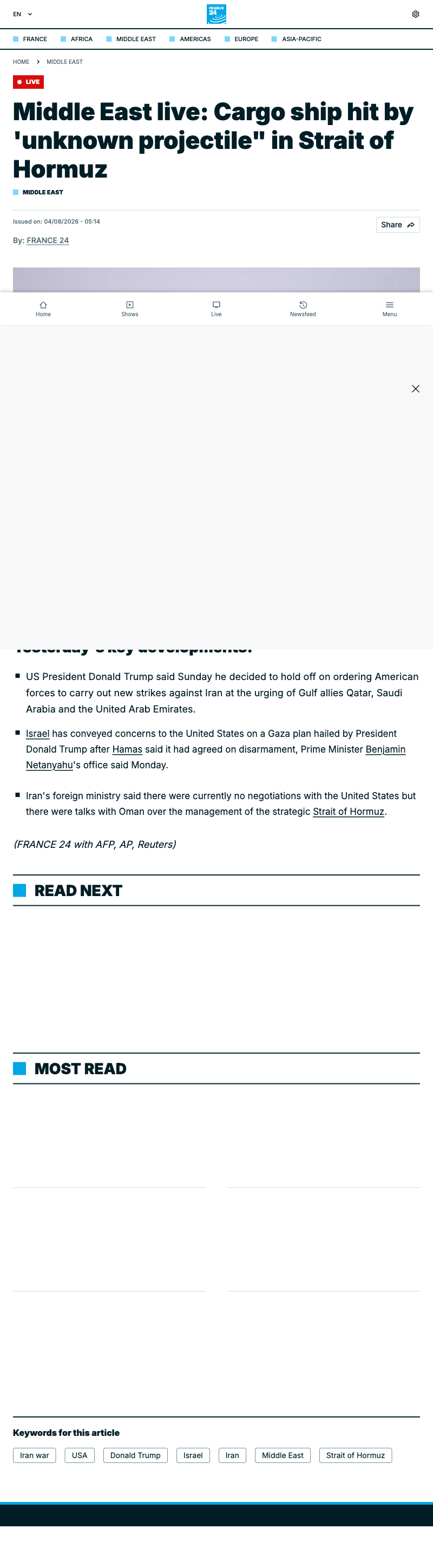
#middle east#shipping#conflict#diplomacy#france24#straitofhormuz#cargo_ship#projectile#iran#israel-gaza_wae?
| gen: 2026/07/30:05:23 in 3 min 26.0 sec (old)bias: 3 (Center) |
| type: lolsquality: 62 |
| pts: 0 |
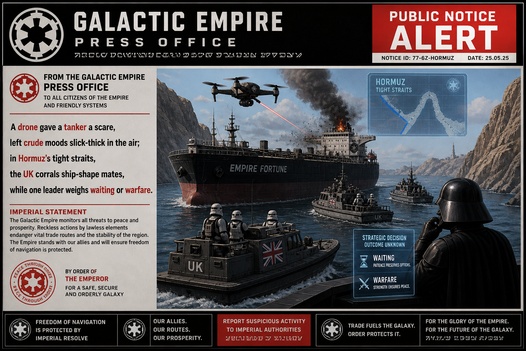
#middle-east#drones#oil#shipping#hormuz#france24#middleeast#droneattack#oilstorage#tanker#maritimesecuri1t

| gen: 2026/07/16:14:41 in 1 min 10.2 sec (old)bias: 2 (Center) |
| type: newsquality: 88 |
| pts: 0 |

| gen: 2026/07/15:04:12 in 1 min 4.9 sec (old)bias: 3 (Center) |
| type: newsquality: 28 |
| pts: 0 |
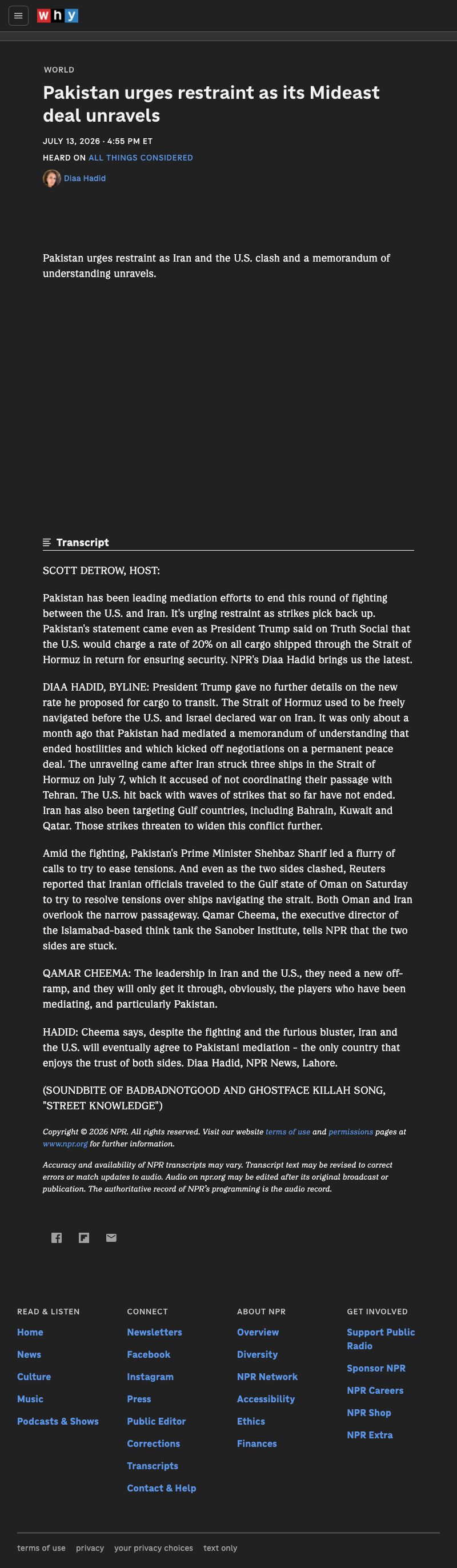 | author: | Dyaa Hadid | institution: | NPR | ¿porque no los dos? |
| tl;dr | The image shows an apparent NPR transcript dated July 13, 2026, about Pakistan attempting to mediate an escalating conflict between Iran and the United States. It says President Trump proposed a 20% charge on cargo passing through the Strait of Hormuz, while Iran and the U.S. exchanged attacks and Pakistan sought to restore negotiations. However, the item contains major credibility concerns: it is dated in the future, provides little supporting detail, and describes extraordinary geopolitical events without sufficient sourcing or corroboration. | ||||
| deeper: | The presentation is relatively restrained and news-oriented. It attributes claims to NPR reporters, Reuters, President Trump’s Truth Social account, and a Pakistani think-tank analyst, and it avoids overtly partisan language. The emphasis on diplomacy and restraint may modestly favor a conflict-de-escalation perspective, but there is no clear left- or right-wing framing. Quality is substantially reduced by the apparent future date, the absence of links or detailed evidence, and the extraordinary claims that the U.S. and Israel declared war on Iran, that Iran attacked Gulf states, and that the U.S. proposed a 20% Strait of Hormuz cargo charge. The transcript also does not explain the alleged memorandum, identify the ships involved, provide official statements, or give enough context to independently evaluate the claims. The NPR branding and polished formatting could be genuine, but the image alone cannot authenticate the article and may depict fabricated or altered content. | ||||
media: No Media Preview | |||||
| gen: 2026/07/09:18:45 in 1 min 22.3 sec (old)bias: 4 (Center) |
| type: lolsquality: 75 |
| pts: 0 |
#conflict#middle east#airstrikes#shipping#geopolitics#us airstrikes#iran retaliation#gulf states#diplomacy#military conflic
 | author: | Louis Casiano | institution: | Fox News | ¿porque no los dos? |
| tl;dr | The article reports on the latest U.S. airstrikes on Iran, which were in response to Iranian-backed attacks on U.S. forces and Gulf Arab states. Iran retaliated by targeting oil infrastructure in Gulf states. The piece discusses the strategic implications and responses from political leaders. Tensions in the region are escalating amid ongoing diplomatic efforts. | ||||
| deeper: | The article provides a balanced overview of the complex situation without favoring one side. It includes insights from multiple stakeholders and presents the geopolitical context. However, it slightly leans towards portraying U.S. actions as defensive. The quality is solid with factual reporting and expert opinions. | ||||
media: | |||||
You made it to the bottom. Now dance!


owned and operated by: RPN Omnigalactic Insitutution as of: 2026/10/11: 13:40 in 0 ms
Enter Code
Login with Account