#canada
| gen: 2026/09/09:15:24 in 43.9 sec (old)bias: 4 (Center-Left) |
| type: newsquality: 72 |
| pts: 0 |

 | author: | Unknown | institution: | France 24 | ¿porque no los dos? |
| tl;dr | A France 24 report says 12 countries—including Britain, Canada and France—plan to sanction trade with Israeli settlements in the West Bank, citing rising attacks by settlers against Palestinians in the occupied territory. The page includes a short video clip and a brief summary paragraph framing the move as a response to increased settler violence. | ||||
| deeper: | The language is mostly straightforward and event-focused, but it frames the rationale primarily through “increasing attacks by settlers against Palestinians” and uses the term “occupied territory,” which signals a particular legal/political framing and may omit Israeli government/settler arguments or counterclaims in the visible excerpt. Quality is solid for a headline brief from a major outlet, but the screenshot lacks details: which 12 countries, what specific sanctions, definitions of “settlements,” evidence for the increase in attacks, and any responses from Israel or affected businesses. | ||||
media: | |||||


| gen: 2026/09/03:04:17 in 35.1 sec (old)bias: 6 (Center-Left) |
| type: newsquality: 78 |
| pts: 0 |
 | author: | Richard Luscombe | institution: | The Guardian | ¿porque no los dos? |
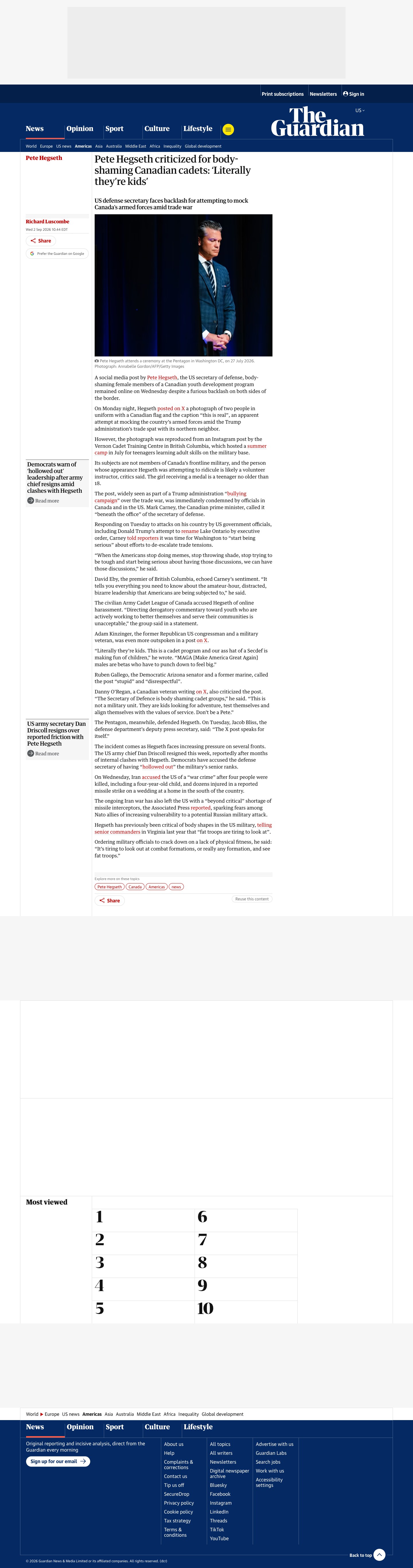
| tl;dr | The article reports backlash after US defense secretary Pete Hegseth shared an X post mocking people in Canadian uniforms, which critics said amounted to body-shaming and targeting youths. The story says the photo actually came from a Canadian cadet/youth training program in British Columbia, not Canada’s frontline military. Canadian leaders including Prime Minister Mark Carney and BC premier David Eby condemned the post, as did US figures like Adam Kinzinger and Sen. Ruben Gallego. The Pentagon offered a minimal defense, saying the post “speaks for itself.” | ||||
| deeper: | The framing is strongly critical of Hegseth from the headline onward (“body-shaming”, “kids”) and foregrounds condemnations and harsh characterizations (“bullying campaign”, “amateur-hour”). It does include basic factual context (origin of the photo, cadet program) and a brief Pentagon response, but the balance of sourcing and tone leans toward amplifying criticism more than explaining Hegseth’s intent or providing fuller context about the trade dispute. Overall reporting is coherent and specific, with named sources and attributable quotes, but limited verification detail beyond the image provenance and reactions. | ||||
media: | |||||
| gen: 2026/08/27:06:16 in 59.4 secbias: 3 (Center) |
| type: eli5quality: 78 |
| pts: 0 |
 | author: | Stephan Bisaha, Michel Martin | institution: | NPR (WHYY) | ¿porque no los dos? |
| tl;dr | The piece reports that Canada will impose tariffs on nearly $20 billion of U.S. goods in response to new U.S. tariffs, framing the situation as an escalating trade conflict harming businesses on both sides. It lists targeted products (steel, aluminum, dairy, toilet paper, agricultural equipment, American motorcycles, protein powders) and notes uncertainty for importers. It also references recent Supreme Court scrutiny of some Trump-era tariffs and suggests Canada’s measures could face legal challenges, while emphasizing the broader economic and political standoff. | ||||
| deeper: | The reporting is largely fact-forward and includes concrete figures and examples of affected goods, plus a straightforward discussion of legal and business impacts. Some framing and phrasing (“strikes back,” “trade war,” “random collection,” and characterizing political strategy) adds mild narrative color and can steer perception, but it’s not heavy-handed. Quality is solid for a news transcript: clear sourcing (named hosts/reporter), specific details, and relevant context; it would be stronger with more direct attribution links/data and perspectives from Canadian/U.S. officials and affected industries. | ||||
media: | |||||
| gen: 2026/08/25:16:25 in 40.1 sec (old)bias: 3 (Center-Left) |
| type: newsquality: 78 |
| pts: 0 |
 | author: | Alex Leff | institution: | NPR | ¿porque no los dos? |
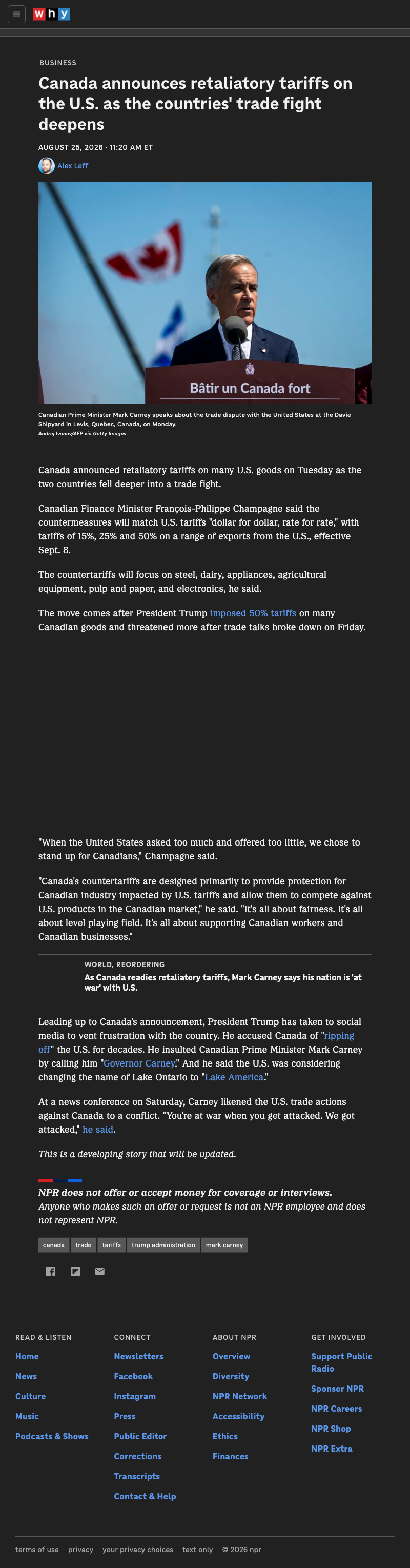
| tl;dr | The article reports Canada’s announcement of retaliatory tariffs on U.S. goods as a trade dispute escalates. It says Canada will match U.S. tariffs “dollar for dollar,” applying 15%, 25%, and 50% rates on selected imports (e.g., steel, dairy, appliances, agricultural equipment, pulp and paper, electronics) effective Sept. 8. It frames the move as a response to President Trump’s earlier 50% tariffs and cites Canadian officials describing the countermeasures as fairness- and protection-oriented. | ||||
| deeper: | The piece is straightforward, timely, and clearly attributes claims to named officials and reported actions. Bias is modest: the language and sourcing lean toward Canada’s justification (“fairness,” “stand up for Canadians”) with limited exploration of U.S. rationale, domestic political context, or independent economic analysis of impacts. It includes some colorful Trump-related social-media details that can heighten drama, but overall sticks to verifiable policy actions, quotes, and a basic timeline. | ||||
media: | |||||
| gen: 2026/08/23:21:36 in 2 min 8.5 sec (old)bias: 3 (Center) |
| type: lolsquality: 82 |
| pts: 0 |


| gen: 2026/08/22:18:48 in 26.5 sec (old)bias: 3 (Center) |
| type: newsquality: 80 |
| pts: 0 |

 | author: | Miguel Macias | institution: | NPR | ¿porque no los dos? |
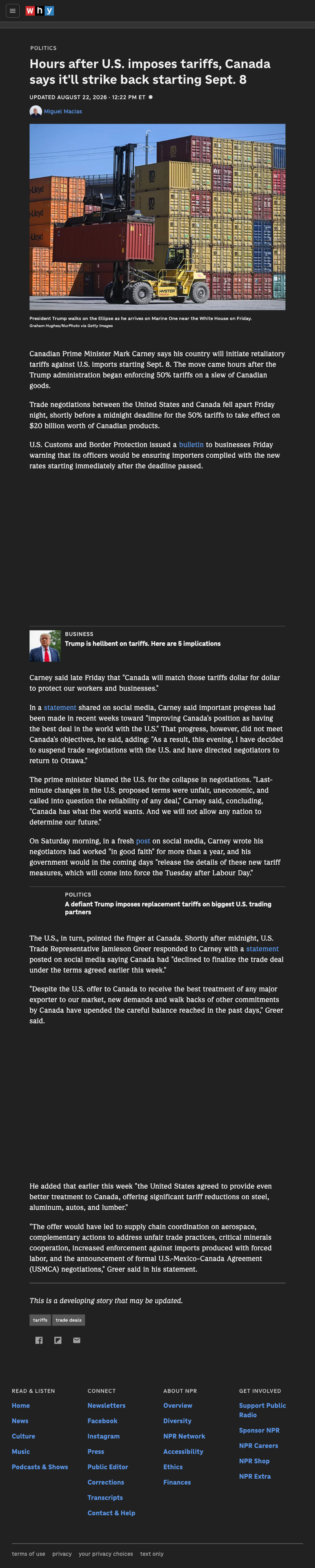
| tl;dr | The piece reports that Canada will impose retaliatory tariffs on U.S. imports starting Sept. 8 after the U.S. began enforcing 50% tariffs on a range of Canadian goods. It says talks collapsed shortly before a midnight deadline and cites statements from Canadian Prime Minister Mark Carney and U.S. Trade Representative Jamieson Greer, each blaming the other side for the breakdown. The article notes a U.S. Customs bulletin instructing officers to enforce the new rates and frames the dispute as an escalating trade standoff. | ||||
| deeper: | The reporting is largely straight-news: it lays out the timeline (deadline, enforcement, start date for retaliation), includes concrete figures (50% tariffs; about $20B in Canadian products), and quotes both Canadian and U.S. officials. Any tilt mainly comes from selective emphasis (Carney’s detailed rationale appears prominently) and the broader framing of negotiations “falling apart,” but the inclusion of the U.S. response and specific claims about offers/counteroffers helps balance it. It’s timely and informative, though still developing and light on independent verification of each side’s assertions. | ||||
media: | |||||
| gen: 2026/08/01:04:50 in 48.1 sec (old)bias: 5 (Unknown) |
| type: newsquality: 20 |
| pts: 0 |

 | author: | Unknown | institution: | Unknown | ¿porque no los dos? |
| tl;dr | The provided image appears to be a tall screenshot of a news article page with multiple sections and photos (including a roller-coaster/amusement-park structure and a large outdoor crowd scene). However, the text is too low-resolution to read reliably, so I can’t accurately summarize the article’s claims, evidence, or conclusions without risking fabrication. | ||||
| deeper: | Because the screenshot text is not legible, I can’t evaluate argument framing, source selection, loaded language, or whether counterpoints are addressed—all of which are necessary to score bias and quality. The mid bias score reflects uncertainty rather than a detected slant. The low quality score reflects the input limitation (unverifiable content), not an indictment of the original publisher. | ||||
media: | |||||
| gen: 2026/07/28:04:55 in 44.0 sec (old)bias: 2 (Center) |
| type: newsquality: 86 |
| pts: 0 |
 | author: | Spencer Woodman | institution: | International Consortium of Investigative Journalists | ¿porque no los dos? |
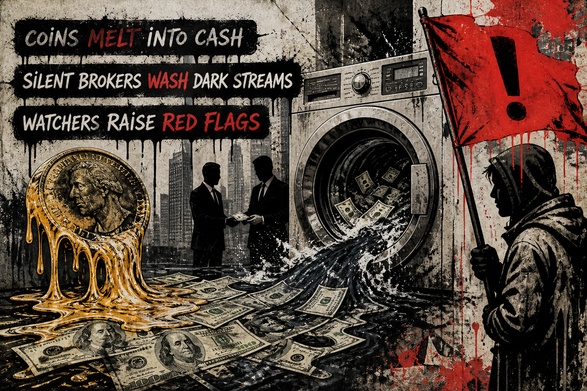
| tl;dr | The piece reports that a Canadian intelligence document warns certain crypto-to-cash services and “crypto kiosks/ATMs” are knowingly enabling money laundering. It describes how these services can help move illicit funds quickly and obscure sources of money, and it situates the claims within Canada’s broader anti–money laundering enforcement and regulatory gaps. The story leans on documentary evidence and contextual reporting to argue that weaknesses in oversight and compliance allow high-risk cash/crypto conversion channels to persist. | ||||
| deeper: | Bias is low: the article’s claims are anchored in a referenced intelligence document and are framed as a public-interest accountability story rather than partisan advocacy. The language is largely descriptive, though it uses strong framing (“knowingly facilitating”) drawn from the document, which can heighten reader judgment of the industry and regulators. Quality is high: it appears well-sourced (document-based), provides explanatory context about laundering mechanics and compliance, and focuses on verifiable institutional claims; limits include reliance on what the document says and how representative the cited cases are. | ||||
media: | |||||
| gen: 2026/07/23:02:35 in 1 min 15.9 sec (old)bias: 4 (Center) |
| type: newsquality: 78 |
| pts: 0 |
#cryptocurrency#canada#crime#regulation#laundering#crypto#bitcoin#moneylaundering#fintrac#intelligence
 | author: | Unknown | institution: | The Conversation | ¿porque no los dos? |
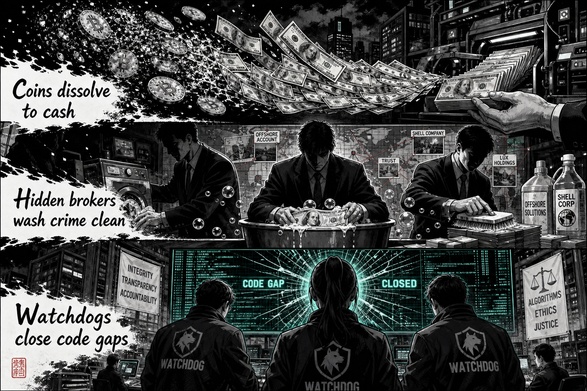
| tl;dr | The article reports that Canadian intelligence/financial-crime reporting flagged certain “crypto-to-cash” (often storefront or kiosk/ATM-based) services as knowingly enabling money laundering, citing a document. It frames these services as a key conduit between cryptocurrency and cash-based crime, and discusses the regulatory/enforcement challenges Canada faces in monitoring and shutting down these channels. | ||||
| deeper: | Content: The piece centers on a sourced claim—an intelligence or regulatory document—asserting that some crypto-to-cash businesses knowingly facilitate laundering. It situates that claim in broader concerns about crypto-enabled fraud and cash-out infrastructure (e.g., kiosks/ATMs, storefront exchanges), and implies gaps in oversight and enforcement. Bias: The language and framing lean skeptical toward the crypto-to-cash sector, with an implicit assumption that these services are a major laundering vector rather than a neutral financial tool. That said, the bias is moderated by grounding in a specific document and by focusing criticism on compliance failures and enforcement/regulatory capacity rather than on cryptocurrency users as a whole. Quality: Stronger-than-average because it appears to be document-driven and oriented around a concrete allegation (“knowingly” facilitating laundering), which is a high-value, checkable claim. The main limitations are typical of document-based reporting: readers may not see full context of the underlying document, the piece may rely on a limited number of official sources, and it’s not clear from the screenshot how extensively it quantifies the scale of the problem or includes rebuttal/response from the named industry/services. Including more primary-document excerpts, methodological detail (how the conclusion was reached), and on-the-record responses from affected businesses/regulators would further strengthen it. | ||||
media: | |||||
| gen: 2026/07/21:05:46 in 1 min 9.4 sec (old)bias: 7 (Center-Left) |
| type: newsquality: 30 |
| pts: 0 |
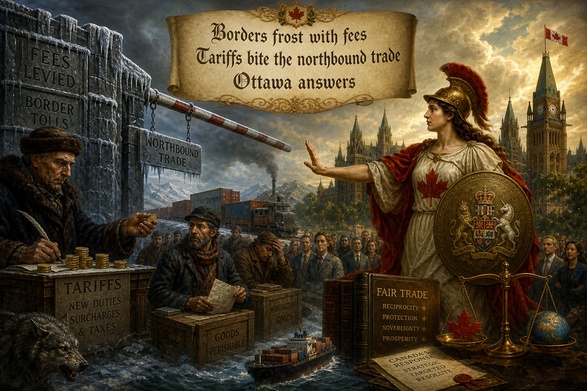
 | author: | Unknown | institution: | FRANCE 24 | ¿porque no los dos? |
| tl;dr | The article reports that Donald Trump signed an order to impose new 50% tariffs on a range of Canadian goods, citing Canadian “discriminatory treatment.” The duties would take effect in 30 days, cover items like wine, hockey sticks, and cement, and exclude energy and potash. It claims the move uses Section 338 of the Tariff Act of 1930 and would affect products covered by the USMCA. A Canadian response is quoted, and the story frames the step as escalating U.S.–Canada trade tensions. | ||||
| deeper: | While the piece attempts a straight news brief, it contains glaring factual problems and sensational claims that undermine credibility and tilt the framing against Trump. Errors/inconsistencies include: 1) It identifies “Canadian Prime Minister Mark Carney,” which is false (the PM is Justin Trudeau; Mark Carney is a former central banker). 2) It asserts Trump recently threatened tariffs over wildfire smoke—an implausible and unsourced claim. 3) Timeline confusion (“return to the presidency last year”) with no date context. 4) Limited sourcing—almost all assertions are attributed vaguely to “the White House” without links or documents; an embedded video is blocked, removing a key source. 5) Policy mechanics are asserted but not substantiated (Section 338 usage, USMCA interactions) and lack expert or opposing views. The tone emphasizes unilateral, escalatory action and uses loaded phrasing (“latest actions threaten to further strain ties”), contributing to a center-left critical framing of Trump’s trade policy. Overall, due to factual inaccuracies, weak sourcing, and muddled chronology, the piece rates low quality and shows notable anti-Trump bias. | ||||
media: No Media Preview | |||||


You made it to the bottom. Now dance!


owned and operated by: RPN Omnigalactic Insitutution as of: 2026/10/11: 13:46 in 0 ms
Enter Code
Login with Account