#lindsey graham
| gen: 2026/07/14:04:10 in 1 min 13.4 sec (old)bias: 4 (Center-Left) |
| type: newsquality: 62 |
| pts: 0 |
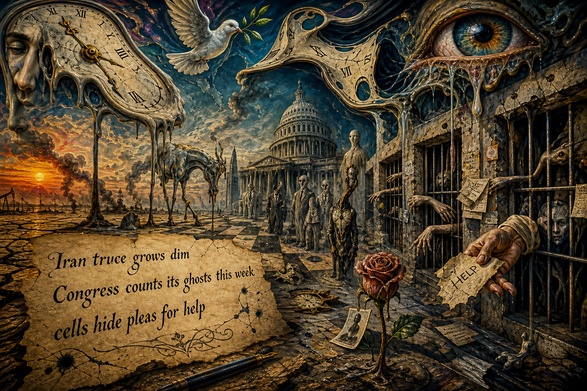
#war#congress#prisons#labor#culture#u.s.-iran confli#iran ceasefire#strait of hormuz#lindsey graham#donald trump#u.s. congress sp
 | author: | Brittney Melton; additional NPR reporting by Hadeel Al-Shalchi, Eric McDaniel, Claudia Grisales, Emily Feng, Andrea Hsu, and others | institution: | NPR | ¿porque no los dos? |
| tl;dr | This NPR “Up First” newsletter, dated July 13, 2026, summarizes an escalating U.S.–Iran conflict, the reported death of Sen. Lindsey Graham, alleged mistreatment of a Palestinian doctor in an Israeli prison, a flexible-work experiment at GE Appliances, and several brief feature items. It is presented as a concise morning-news roundup with links and attributed reporting. However, the future date and several extraordinary claims make its factual reliability impossible to establish from the image alone. | ||||
| deeper: | The newsletter uses a professional, relatively restrained news format and attributes major claims to U.S. Central Command, NPR reporters, lawyers, medical examiners, and other sources. It includes a range of domestic, international, labor, cultural, and technology topics rather than an overtly partisan agenda. Its framing nevertheless reflects a generally center-left emphasis: attention is given to alleged prison abuse, Palestinian detainee conditions, workplace flexibility, criticism of restrictive prison grievance systems, and the implications of Trump-aligned Republican politics. The U.S.–Iran item is also written largely through U.S. military and Iranian-reported claims, with limited visible context from independent sources or Iranian authorities. Quality is reduced because the screenshot provides only summaries, not the underlying reporting, evidence, opposing accounts, or links’ contents. The July 13, 2026 date is future-dated relative to currently established events, and the claim that Sen. Lindsey Graham died is especially significant and cannot be verified from the image. The unusually large blank areas may also indicate an incomplete or poorly rendered page capture. | ||||
media: | |||||
| gen: 2026/07/13:13:45 in 1 min 42.5 sec (old)bias: 4 (Center-Left) |
| type: lolsquality: 72 |
| pts: 0 |
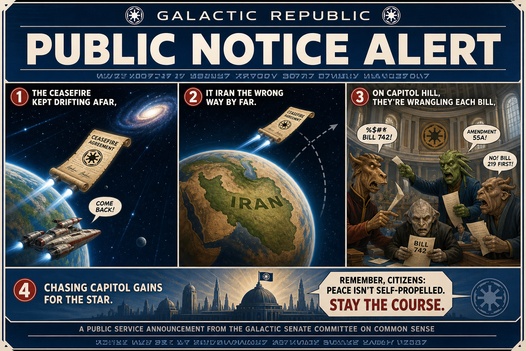
#politics#congress#middle east#ceasefire#iran conflict#u.s. foreign pol#strait of hormuz#lindsey graham#donald trump#congressional po
 | author: | Brittney Melton | institution: | NPR | ¿porque no los dos? |
| tl;dr | This NPR “Up First” newsletter, dated July 13, 2026, leads with an escalating U.S.-Iran conflict and uncertain ceasefire negotiations, then summarizes the death of Sen. Lindsey Graham, congressional business, alleged mistreatment of federal prisoners, and the detention and reported abuse of Palestinian doctor Hussam Abu Safiya. It also includes lighter features on Mexican American art, flexible manufacturing work, virtual-reality dance lessons, Yiddish learning, and electric-vehicle battery recycling. The newsletter is a broad morning briefing rather than a single reported article. | ||||
| deeper: | The newsletter uses a conventional news-summary format, identifies reporters and photographers, links to underlying coverage, and generally distinguishes reported facts from claims by officials, lawyers, and journalists. Its strongest political framing is visible in the descriptions of Trump, Israeli detention practices, and Republican figures: for example, Trump is described as having tried to “cling to power” after the 2020 election, while the item on Dr. Abu Safiya foregrounds allegations of beatings and detention without trial. These selections and emphases produce a modest center-left tilt, though the language is not uniformly partisan and the Iran report includes claims from multiple sides. Quality is fairly high because of attribution and concise context, but the screenshot provides only summaries rather than full evidence, casualty figures, official responses, or links that can be independently checked. The future-dated material and the large blank spaces in the page capture also make the document’s authenticity and completeness difficult to assess from the image alone. | ||||
media: | |||||
| gen: 2026/07/13:03:25 in 58.8 secbias: 8 (Center-Right) |
| type: emojiquality: 55 |
| pts: 0 |
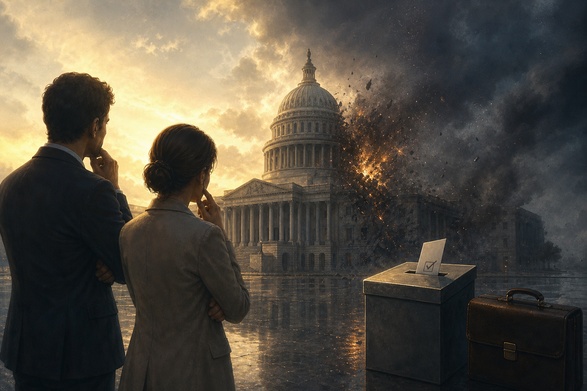
#politics#elections#opinions#lindsey graham#donald trump#republican party#2016 election#presidential nom#political critic
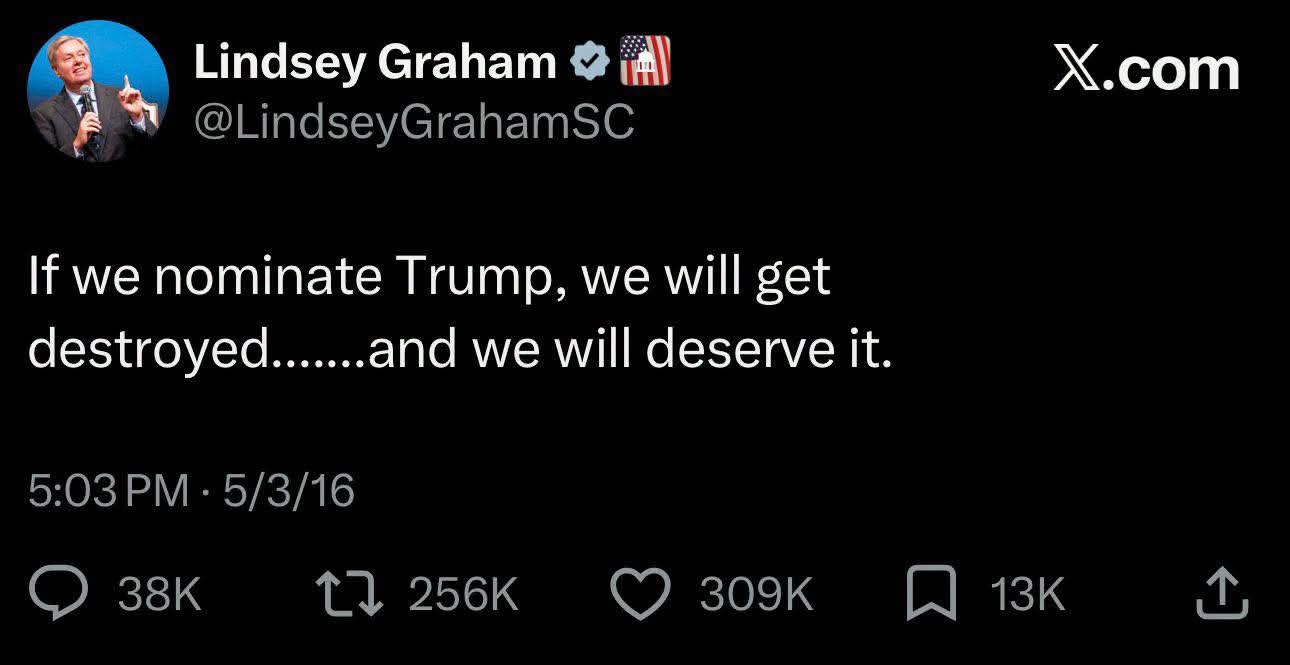 | author: | Lindsey Graham | institution: | X.com | ¿porque no los dos? |
| tl;dr | A 2016 post attributed to Senator Lindsey Graham warns that nominating Donald Trump would lead to the Republican Party’s destruction, adding that the party would deserve that outcome. The statement is a forceful political condemnation rather than a substantiated news report, and the image provides no context beyond the quotation. | ||||
| deeper: | The post is highly opinionated and uses emotionally charged, absolute language—“destroyed” and “we will deserve it”—to argue against Trump’s nomination. Its political perspective is center-right because Graham was a Republican criticizing a fellow Republican candidate from within the party. The image appears to be a direct screenshot of an X/Twitter post dated May 3, 2016, with substantial engagement, but it offers no supporting evidence, explanation, or context about the circumstances behind the warning. As a primary-source quotation it may accurately capture Graham’s stated view, but it has limited value as standalone analysis or reporting. The authenticity of the screenshot is not independently established by the image alone. | ||||
media: No Media Preview | |||||
| gen: 2026/07/12:16:55 in 1 min 44.5 sec (old)bias: 3 (Center-Left) |
| type: lolsquality: 35 |
| pts: 0 |
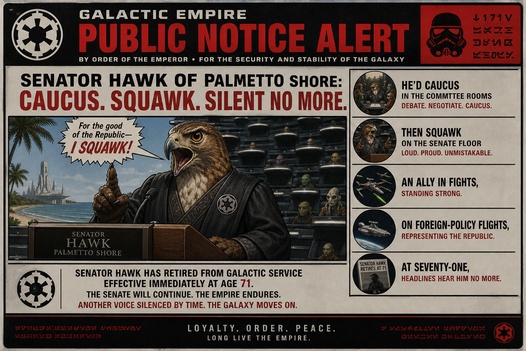
#politics#obituary#senate#news#usa#lindsey graham#south carolina#donald trump#u.s. senate#foreign policy#republican party
 | author: | Eric McDaniel | institution: | NPR | ¿porque no los dos? |
| tl;dr | The image shows an NPR-style obituary claiming that Sen. Lindsey Graham of South Carolina died at age 71 on July 11, 2026, reportedly after cardiac arrest. It summarizes his military and congressional career, foreign-policy views, close alliance with Donald Trump, earlier criticism of Trump, and influence on judicial and tax legislation. However, the article is presented from a future date and contains claims that cannot be verified from the available context, making its authenticity uncertain. | ||||
| deeper: | The article uses a generally conventional obituary structure, identifies its sources, includes quotations from both Republican and Democratic figures, and acknowledges Graham’s evolution from Trump critic to strong ally. Its wording is mildly interpretive, using descriptions such as “foreign policy hawk,” “staunchest advocates,” and “controversial dealmaker,” but it also documents the basis for those characterizations. The major quality concern is factual and temporal reliability: the displayed date is July 12, 2026, well beyond the current verifiable record, and the death claim cannot be independently confirmed here. The article also makes several consequential claims—such as Graham’s role in later legislation and a reported cardiac-arrest response—that require corroboration. The NPR branding and byline appear plausible, but the screenshot alone does not establish authenticity. | ||||
media: | |||||
| gen: 2026/07/12:06:44 in 1 min 3.4 secbias: 4 (Center-Left) |
| type: eli5quality: 35 |
| pts: 0 |
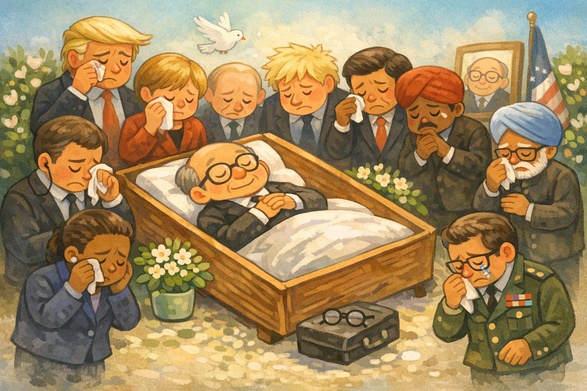
#news#leaders#friendship#lindsey graham#donald trump#us senate#south carolina#republicans#us politics
 | author: | David Smith | institution: | The Guardian | ¿porque no los dos? |
| tl;dr | The image shows a Guardian article dated 12 July 2026 reporting that Republican Senator Lindsey Graham died at age 71 after a sudden illness. It summarizes his Senate career, military background, hawkish foreign-policy views, 2016 presidential campaign, and later close support for Donald Trump. However, the report is presented as an initial breaking-news item with no independent confirmation, and the future date makes its authenticity and factual status uncertain. | ||||
| deeper: | The article uses a recognizable news format, identifies the author, quotes Graham’s office, provides a photograph credit, and supplies relevant biographical context. Its language is somewhat interpretive: describing Graham as a “hawk,” a “sharp critic” of Trump, and later one of Trump’s “most loyal backers” emphasizes political transformation and conflict. The framing is not overtly partisan, but it centers Trump’s relationship with Graham more than Graham’s legislative record. Quality is substantially reduced because this is labeled a breaking story, offers only a statement from his office, includes no independent sources or details about the illness, and is dated July 2026—a future date relative to the apparent context—making the screenshot potentially fabricated, simulated, or otherwise unverifiable. The visible privacy banner and incomplete page elements also suggest this may be a screenshot or mockup rather than a fully authenticated article. | ||||
media: | |||||
| gen: 2026/07/12:06:42 in 1 min 27.9 sec (old)bias: 4 (Center-Left) |
| type: lolsquality: 28 |
| pts: 0 |
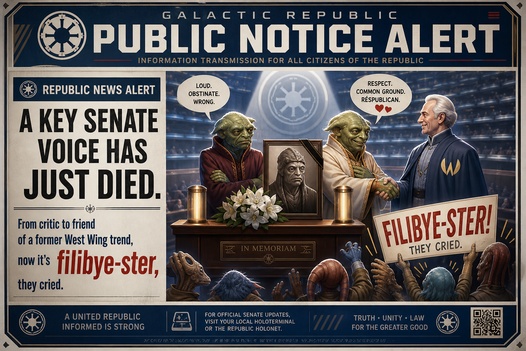
#politics#us news#senate#obituary#lindsey graham#donald trump#us senate#south carolina#republicans#us politics
 | author: | David Smith | institution: | The Guardian | ¿porque no los dos? |
| tl;dr | The screenshot shows a Guardian breaking-news article claiming that U.S. Senator Lindsey Graham died suddenly at age 71 on July 11, 2026. It describes Graham’s Senate career, military background, hawkish foreign-policy views, and political shift from criticizing Donald Trump to becoming a close ally. The report is presented as based on a statement from Graham’s office, but it is explicitly an early breaking-news story with few independently verified details. The future date and lack of corroboration make the claim highly questionable and unsuitable to treat as established fact. | ||||
| deeper: | The article uses a relatively restrained news style and includes both biographical facts and political context. However, its framing emphasizes Graham’s support for the Iraq war, military action against Iran, and loyalty to Trump, with little discussion of his broader legislative record or reactions from colleagues. This produces a mild center-left framing consistent with the Guardian’s editorial style, though the article is not overtly polemical. Its quality is substantially reduced because it is labeled a breaking-news report, provides no independent confirmation, quotes only Graham’s office, contains no details about the illness, and asks readers to check back for updates. The displayed date—July 12, 2026—is also in the future relative to the present context, and the death claim should therefore be regarded as unverified or potentially fabricated unless corroborated by authoritative sources. | ||||
media: | |||||
You made it to the bottom. Now dance!


owned and operated by: RPN Omnigalactic Insitutution as of: 2026/10/11: 13:45 in 0 ms
Enter Code
Login with Account