#courts
| gen: 2026/09/03:23:18 in 36.4 sec (old)bias: 3 (Center) |
| type: newsquality: 78 |
| pts: 0 |


| gen: 2026/08/23:21:39 in 2 min 22.3 sec (old)bias: 3 (Center-Left) |
| type: lolsquality: 78 |
| pts: 0 |
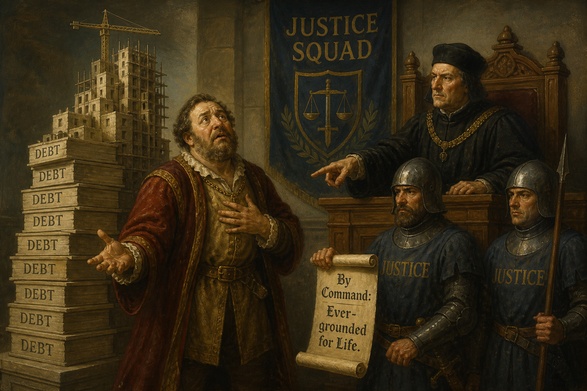
 | author: | Amy Hawkins | institution: | The Guardian | ¿porque no los dos? |
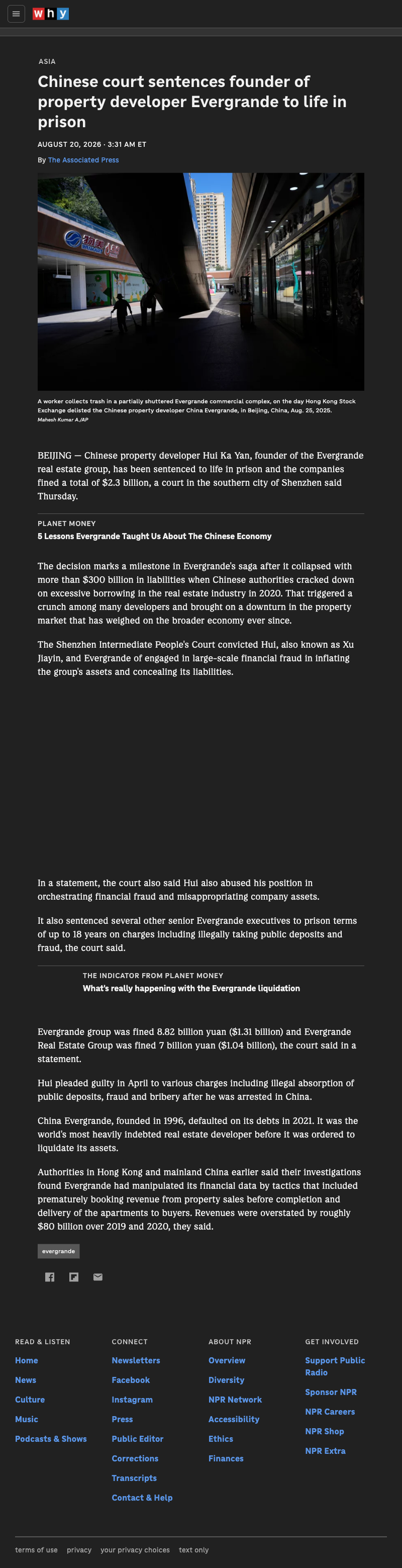
| tl;dr | The Guardian reports that Hui Ka Yan, founder of China’s Evergrande, has been sentenced to life in prison after pleading guilty to fraud. The piece says he and others were accused of inflating company finances and that authorities will confiscate his personal property. It places the case in the wider context of China’s real-estate downturn, heavy developer debt, and Beijing’s regulatory crackdown, noting Evergrande’s outsized role in the sector’s broader crisis and household exposure through pre-sold homes. | ||||
| deeper: | The article is largely straight news with clear attribution and context about the property slump and enforcement actions. Bias is modest: language and framing lean toward skepticism of Evergrande’s conduct and highlight systemic risks and government crackdown, but it does not read as polemical. Quality is strong due to coherent narrative, relevant background, and specific figures; it would be higher with more primary-document detail (court judgment text, defense claims, and fuller sourcing beyond official statements/media reports). | ||||
media: | |||||
| gen: 2026/08/22:19:00 in 24.9 sec (old)bias: 2 (Center) |
| type: newsquality: 83 |
| pts: 0 |
| gen: 2026/08/18:14:29 in 5 min 16.3 sec (old)bias: 3 (Center) |
| type: lolsquality: 72 |
| pts: 0 |

 | author: | Unknown | institution: | Yahoo News | ¿porque no los dos? |
| tl;dr | A Yahoo News article reports that a judge has blocked the Trump administration from relocating the FBI’s headquarters to a Washington, D.C., office building. The piece frames the move as a contested administrative decision and highlights legal arguments over whether the relocation process complied with applicable rules and obligations. It emphasizes the court’s intervention and the immediate effect: halting the planned move while the dispute proceeds. | ||||
| deeper: | The writing appears largely straight-news: it focuses on the judge’s action, the administrative decision being challenged, and the practical consequence (the move is blocked). The headline uses a clear, factual verb (“blocks”) and the story is framed around a legal ruling, which generally constrains speculation. Potential bias comes from selection and emphasis (court setback for the administration) and limited visibility of the administration’s strongest rationale in the screenshot, but the overall tone reads more descriptive than argumentative. | ||||
media: | |||||
| gen: 2026/08/15:02:33 in 45.6 sec (old)bias: 3 (Center) |
| type: newsquality: 82 |
| pts: 0 |

 | author: | Fergal Sheil | institution: | International Consortium of Investigative Journalists (ICIJ) | ¿porque no los dos? |
| tl;dr | An ICIJ report says alleged cartel figure Daniel Kinahan was arrested in Dubai and has now been charged in Ireland after being extradited under high security. The article recounts Kinahan’s reported role in the “Kinahan cartel,” U.S. sanctions and accusations of large-scale drug trafficking and money laundering, and notes he has denied wrongdoing. It mentions other suspects and related investigations, and places the case in the broader context of transnational drug smuggling networks and financial flows. | ||||
| deeper: | The piece is largely straight news, relying on attributed claims (Irish authorities, court proceedings, prior U.S. sanctions announcements, and earlier reporting). Language like “alleged” appears repeatedly, and denials are included, which reduces slant. Some framing is implicitly prosecutorial because most available facts come from law enforcement and court filings, and there’s limited detail on defense arguments beyond denials. Overall quality is strong: clear timeline, relevant context, and careful attribution; it could be stronger with more direct quotations from legal filings and fuller defense-side detail. | ||||
media: | |||||
| gen: 2026/08/02:05:33 in 2 min 49.3 sec (old)bias: 4 (Center-Left) |
| type: lolsquality: 70 |
| pts: 0 |
 | author: | Unknown | institution: | ProPublica | ¿porque no los dos? |
| tl;dr | The screenshot appears to be a ProPublica long-form investigative article (dark theme, ProPublica masthead, multiple sections and at least one embedded photo). However, the image resolution is too low to reliably read the headline, subhead, author, or the article text, so I can’t accurately summarize the specific claims, evidence, or conclusions. If you share a higher-resolution image or the article link, I can give a precise content summary and a much more defensible bias/quality assessment. | ||||
| deeper: | Because the text is not legible at this resolution, any detailed assessment would risk inventing specifics. Based on the outlet format alone, this looks like a reported investigative piece with substantial narrative length and supporting material—typically higher-quality than opinion content. ProPublica’s work often emphasizes government/corporate accountability and public-interest framing, which usually maps to a mild center-left lean, but I cannot verify the article’s framing, evidence selection, or fairness without readable text. | ||||
media: | |||||
| gen: 2026/07/18:02:20 in 1 min 9.8 sec (old)bias: 4 (Center-Left) |
| type: newsquality: 85 |
| pts: 0 |
 | author: | Unknown | institution: | The Bureau of Investigative Journalism | ¿porque no los dos? |
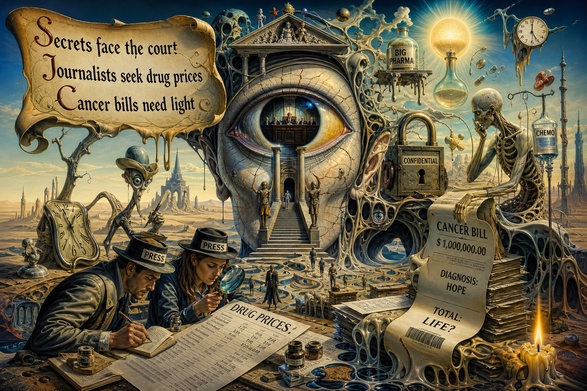
| tl;dr | Investigative report on a legal fight in Austria over whether the net price (after confidential rebates) of Merck’s blockbuster cancer drug Keytruda must be disclosed. After information requests by journalists, a lower authority moved toward release; Merck has now taken the case to Austria’s Constitutional Court to stop publication, arguing trade‑secret protection and harm to competition. Transparency advocates and journalists argue secrecy obscures public spending and weakens negotiating power. The case could set an EU‑relevant precedent for price transparency of high‑cost medicines. | ||||
| deeper: | The article is rigorous and specific: it names the court venue, describes the legal pathway, explains what information is sought (net price/discounts for Keytruda), and places the case in the broader debate over drug‑price transparency. It cites positions from both sides—Merck’s trade‑secret argument and journalists’/public interest transparency claims—and connects the stakes to health‑system budgets and precedent value. Tone and framing clearly favor transparency and skepticism of pharma secrecy, which introduces a modest pro‑disclosure bias, but the piece avoids emotive language and sticks largely to verifiable facts and legal context. Potential gaps: limited exploration of how confidentiality can sometimes secure lower public prices, and few independent legal experts quoted to assess the likelihood of Merck’s claims. Overall, solid investigative quality with minor slant toward transparency advocacy. | ||||
media: | |||||
| gen: 2026/07/15:01:51 in 59.9 sec (old)bias: 3 (Center-Left) |
| type: newsquality: 48 |
| pts: 0 |
#politics#courts#immigration#sports#media#strait of hormuz#iran#donald trump#shipping tolls#ice shooting#maine immigratio
 | author: | Brittney Melton | institution: | NPR | ¿porque no los dos? |
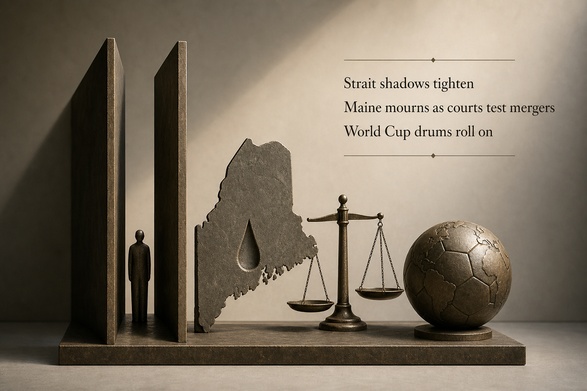
| tl;dr | This is a screenshot of NPR’s “Up First” newsletter dated July 14, 2026. It highlights an alleged U.S. plan to reinstate a blockade and impose a 20% cargo toll in the Strait of Hormuz, a fatal shooting involving an ICE officer in Maine, and a lawsuit challenging Paramount’s proposed acquisition of Warner Bros. Discovery. It also contains extensive 2026 World Cup coverage and promotional material. The presentation is professional, but the article’s future-dated claims cannot be independently verified from the image, and the page contains conspicuous formatting problems and internal credibility concerns. | ||||
| deeper: | The reporting language is generally restrained and attributes disputed claims to officials, critics, NPR reporters, or advocacy groups. It includes multiple sides of the Paramount-Warner dispute and does not use strongly partisan rhetoric. However, the selection and framing show a mild center-left tendency: attention is given to immigrant-rights concerns, protesters, and criticism of the Trump administration, while the administration’s justification is presented more briefly. The quality score is reduced by several issues. The screenshot is dated July 14, 2026, so its major geopolitical and domestic claims are future-dated relative to the apparent publication context and cannot be verified here. The article provides few direct links, documents, named officials, or detailed sourcing for highly consequential claims about a Hormuz blockade, U.S.-Iranian strikes, and an ICE shooting. The page also has enormous blank sections, appears duplicated in the supplied image, and contains a likely factual or editorial error: it describes the 2026 World Cup as being in a ‘final stretch’ while listing extensive semifinal coverage without clearly explaining the timing. The text mixes hard news, commentary, lifestyle material, sports promotion, and marketing links, making it more of a newsletter digest than a focused news article. | ||||
media: | |||||
You made it to the bottom. Now dance!


owned and operated by: RPN Omnigalactic Insitutution as of: 2026/10/14: 12:24 in 0 ms
Enter Code
Login with Account